Search this Site and the Web

Showing posts with label Ethnicity. Show all posts

Thursday, August 10, 2023

"CHI" IN IGBO THOUGHT AND CULTURE

Written by Rev. Fr. Francis Anekwe Oborji, Pontifical Urban University, Vatican City (Rome)
Email: anekwe.oborji@gmail.com

Monday, July 10, 2023

Our concern in this short write-up is to articulate, briefly, the true meaning and significance of the concept, "CHI" among the Igbo in the context of the concept of the "Person" in African thought and culture as articulated in Igbo, African scholarship in recent years.

The Problem:

The pre-theoretical concern about the concept of the person in philosophical and theological discourse challenges us to give a unique and coherent response to the following questions: What is the person? What does it mean for a person to be the same persistent entity through time (or in a moment of time)? How many distinct ontological entities constitute a person? What relationship, if there is, exists between the subjective experiences of an individual first-person and our perspective third-person? What is the influence of our culture and society on our system of thought and interpretation of reality and 'non-regular causation' of things in the universe? What kind of relationship exists between the thinker and his cultural and religious context? What is the influence of this cultural context on our philosophical and theological thoughts?

The African scholars, especially, philosophers and theologians, including the Igbo scholars, take seriously the challenge of giving an adequate response to these questions in the African, Igbo context and perspective. This is why in the African, Igbo context, unlike that of the West, plausible answers to an application, are usually informed by plausible answers to other questions.

Therefore, to appreciate the rich meaning and significance of Igbo concept of "Chi" in the context of the concept of person in African thought and culture, I would like to explore the way in which the Igbo, African theory of the universe and of the ontological reality has provided us with the integrated responses to the question under consideration. And how we must build these answers on it. My approach, partly descriptive and partly imaginative, should be familiar; I adopted it by the tradition of the first African scholars, from their reaction as well as their appreciation of the pioneering work of Placide Tempels, La Philosophie Bantoue, published in 1945.

SHOP AMAZON: Car & Vehicle Electronics

Tuesday, June 15, 2021

Igbo And Igala – Geographical, Historical And, Cultural Relationships

By Joy

June 9, 20210

It is a vague fact that the Igalas have a close tie to the Igbos, just how close is this tie? In almost every Igbo state, a sprinkle of indigenous Igala people is found thriving, be it an element of their culture, religion, dialect, or descendants. Who are the Igalas and what is their relationship with the Igbos?

Igbo And Igala Relations

The Igala are an ethnic group in Nigeria. Their homeland, the former Igala Kingdom, is an approximately triangular area of about 14,000 km² in the angle formed by the Benue and Niger rivers. The area was formerly the Igala Division of Kabba province and is now part of Kogi State. The capital is Idah.

The Igala people rank amongst ethnic groups in Nigeria with the highest population, they are situated east of the river Niger and Benue confluence, straddling the Niger in Lokoja. Unlike every tribe in Nigeria, they practice Christianity and Islam almost in equal proportions, with few traditional worshippers. It is beautiful to note that both religions exist side by side without little or no squabbles. 

The Igala people are found in several parts of the country, with an estimated population of 4 million. In all the Southeastern states, traces of Igala descendants have been found over the years. 

Five Most Ancient Igbo Towns

On the northern border of the Enugu state, the Kogi Igalas overflow the boundary and dominates the communities there. In Abia state, communities like Onu-Aku, Umuogu, Amaogu, Umuogwu towns have traced their origin to the Igala kingdom of 15500, in every state in Igboland, there are communities who trace their origin of migration to the Igala kingdom.

Tuesday, March 2, 2021

THE IGBO DELTA STORY

#igbohistory3000bc

According to Dennis Osadebey in the book, Building A Nation, Nnebisi was the

son of a Nteje woman, Diana, who had gotten pregnant to an Igala man, Ojobo
 

Nnebisi grew up in Nteje thinking he was of the kindred, but one day, after a quarrel, he was told that his father was not from there, so he could not take part in land sharing. 
He thus left Nteje with his followers and followed a route which brought him to the great river. 
If you look at a map of those areas, it is quite easy to trace the route taken by Nnebisi, which must have taken him through Nsugbe, and then along the Anambra River (Ọma Mbala), and then t the point where the Anambra River joins the Niger River.
 
That precise point where the Anambra River joins the Niger Rivers coincidental, the precise point where you can take an eight-minute boat ride and land at Cable Point in Asaba. Nnebisi and his people crossed landed at Ikpele Nmili and decided to plant their crops there for the year. A year later, after a great harvest was (of course the area is rich in alluvial soils brought from upstream by the river), they decided to settle there. 

Nnebisi called the place Ani Ahaba (We have settled in this land), and four hundred years later, some white chap hearing the name that the natives called their land, wrote Asaba in his map, and not Ahaba. That man was Carlo Zappa, an Italian priest who was appointed Prefect of the Upper Niger by the Catholic Church.
Zappa spent a lot of time converting the natives in both Asaba and Onitsha, and to Ojoto, East of the Niger, and Agbor, West of the Niger.
A look through Catholic records during the Ekumeku resistance will show that at the turn of the century, most of the Catholic priests in what is now the Diocese of Issele Uku in Delta State, came from the Onitsha area, as they were all under the same ecclesiastical province
 
A look at the roll call of the dead from the Aba Women’s affair of 1929, shows that the wife of the Sanitary headman in Opobo was from Asaba, which kind of tells you the direction in which people went before the split of Southern Nigeria into East and West in 1954.
Up until that point in 1954, many from the Igbo speaking areas just west of the Niger River, found it easier to cross the river to do their business.
And why not? 
The distance between Asaba and Owerri is just 102km.
Asaba to Enugu is 125km, while Asaba to Umuahia is 142km.
All of these places are closer to Asaba than Warri, which in modern Nigerian geopolitics is in the same state as Asaba. 
Warri is 176km from Asaba.
The Asaba man, when he arrives in either Enugu, Owerri or Umuahia, speaks the same language as the people in those places, barring the normal dialectal differences that occur in languages that are spread over large geographical areas.
This same Asaba man would arrive in Warri, and would be at a complete loss as to what the native in Warri is saying…

Friday, September 25, 2020

1966 coup plotters planned to make Awolowo Head of State — Olutoye

 50 years after, Oba Olutoye, participant in Nigerian Civil War tells the world that Nzeogwu coup was meant to install Awolowo

1966 coup plotters planned to make Awolowo Head of State — Olutoye

The Owa of Ido-Ani, Oba Olufemi Olutoye, is a retired Major-General in the Nigerian Army. In this interview with PETER DADA, he shares his experiences as a soldier and his level of involvement in the 1966 military coup

Can you share your background with us?

My name is Olufemi Olutoye. I was born in Ido Ani town, Ose Local Government Area of Ondo State. I spent the early part of my childhood days in Benin City, Edo State, when my father was the headmaster at St. James’ Primary School, Benin City. From there, I went to Government College Ibadan in 1945. I completed my secondary school education in 1949. I then gained admission to the University of Ibadan in 1950 and I graduated in June 1954. I also went to Cambridge University and concluded my course there in 1955. When I returned to Nigeria, I started teaching at the Olu-Iwa College, Ijebu Ode, (now Adeola Odutola College). Later, I left teaching to join the Nigerian Army in 1957 and I retired in 1977.

What informed your decision to join the army, when you were a university graduate?

I believed then that I had attained the height of the teaching profession because teaching then was different from what we have now. I worked in a private school and I believed I had already reached the limit and that there was nothing to look forward to again. Secondly, I wanted adventure.  I taught briefly in a public school in England where there was a Cadet Corps, where young boys were given uniforms. I asked myself then that why couldn’t we have such kind of school in Nigeria? I was the acting principal for a year, so I had to leave after that. That was when I got to the army where I rose through the ranks to become Major General before I eventually retired in 1977.

You were in the army when the first coup happened in Nigeria. Can you tell us about your experience?

I hope that I will have time to write more about that coup but I am doing something on it right now. The coup was led by Chukwuma Kaduna Nzeogwu. He was a Major in rank and of course, I was a Major then too but I was his senior. So I knew about that coup. I can say that now but I could not say that then because, in the army, the mere knowledge of a coup is a problem. We were together in India. So, he informed me about it and I enquired more about how he hoped to carry out the plot. When he told me that it would involve killings,  I told him to count me out. I told him that I did not join the Nigerian Army to kill Nigerians.

Was he the one that personally approached you to inform you about the plan?

Yes, he personally came to inform me about it in 1964 when we were in India and the coup was carried out in 1966. Few other things happened which we cannot say now until the time is ripe.

M. I. OKPARA CANNOT BE COMFORTABLE IN HIS GRAVE

 By Mazi Omife I. Omife,  Mbuze Mbaukwu


When Zik, the spirit man, left Onitsha province, Awka District, to Umuahia and appointed Dr. M. I. Okpara as the premier and late Dr.  Akanu Ibiam as the Govenor of Eastern Region of Nigeria, people did not have much qualms about Ibiam. After all, they said, the post of a Governor was a ceremonial one.

 In the case of Okpara, some people were skeptical about his eligibility for the position of premier which was an executive position. In the first place,  people did not know much about him like Dr. J. O. J. Okezie and others associated with  known Zikists and die hard supporters of the great Zik of Africa.

 Secondly, people said he was too fat, which they assumed had something to do with dullness, timidity and lack of leadership charisma, believing that the politics of those days called for a very agile, brave and vibrant person who had the gut to play the hot tribal Nigerian politics of the time and look at other politicians from other regions in the eye without blinking or shying away whenever the situation called for it, which qualities they thought Okpara did not possess, judging by his physical appearance.

 All this while, M. I. Okpara kept his calm and this calmness seemed to give credence to what people were thinking. Could this man carry the cross left behind by the great Zik?

 However, in a short while, the same people began to see the true M. I. Okpara in action as a man of courage, charisma, leadership acumen, patriotism and a leader with full Igbo blood running in his veins.

 Once when late Chief Obafemi Jeremiah Awolowo came to the East for political campaign, the Aba boys threw stones at him and his entourage. The story was everywhere. The Western  press was furious in condemning the action. Even the Federal Government of Alhaji Tafewa Balewa condemned it vehemently.

 Before then, an event had been fixed at Ibadan where M. I. Okpara was billed to present a paper and the event was in a month’s time. The then premier of Western region, Sir Akintola, in reaction to the Aba incident, publicly warned Okpara not to set his foot in Ibadan. But M. I. Okpara would not yield to that threat.

Thursday, July 16, 2020

Bastardisation of Igbo chieftaincy titles no longer acceptable - Ndigbo

*It is worrisome, we should fashion a general rule to safeguard our cultural values - Ohanaeze
*Monarchs should scrutinize recipients - Eze Nwabeke

*Some monarchs debased titles by advertising them on social media - Ozo Anaekwe

*It is against natural justice to give chieftaincy titles to people of questionable character - Igwe Ukuta

VANGUARD  Wednesday, July 15, 2020
By Anayo Okoli, Chimaobi Nwaiwu, Ugochukwu Alaribe, Chinedu Adonu, Chinonso Alozie & Ikechukwu Odu – Enugu

Ab initio, in Igbo land, chieftaincy titles are conferred only on illustrious men and women who have distinguished themselves in one thing or the other.

Some of them through their philanthropic disposition built roads, schools, churches, industries, markets, instituted scholarships to the people and other commendable and developmental projects/activities. Then, chieftaincy titles had value and respect. They were not common because they were not gotten easily.

But today, the situation has changed for bad. Chieftaincy titles no longer carry weight; they have lost their respect and value as they are purchased from traditional rulers, some at ridiculous prices.

Monarchs now dish titles out to even men of questionable characters, including known fraudsters, just because they have the money to throw around. Today, the once prestigious titles meant for men of good heart and goodwill have been bastardized and almost made worthless.

This, no doubt is giving some Igbo people concern, including the apex Igbo body, Ohanaeze Ndigbo. Some Igbo leaders, traditional rulers inclusive attributed the problem to various issues.

Ohanaeze Ndigbo, in particular, regretted that the cultural values of Ndigbo have been badly eroded in every aspect to the extent that chieftaincy titles now go to people with very questionable characters.

According to Prince Uche Achi-Okpaga, the national publicity secretary of the apex Igbo body, the bastardization of chieftaincy titles is part of the entire mess Igbo culture and tradition have gone through.

"The crux of the matter is that our cultural values have been ferociously eroded in all ramifications. The issue of chieftaincy titles does not exist in oblivion. It is part of the entire mess.

“Our young men, in the words of Prof Chinua Achebe, "…whose palm kernels were cracked by benevolent gods…" covet chieftaincy titles as if their lives are tied to it.

Tuesday, May 5, 2020

Anioma v Igbo

Written by Cheta Nwanze, a researcher, lives in Lagos

VANGUARD Nigeria, Saturday, May 2, 2020.

Last year I took my friend and partner, Tunde Leye to my homestead. In going to that area, we did not cross the Niger River (Oshimmiri in my native dialect) the way most people cross it these days. Rather, we went the old way. We took a boat from Cable Point (Ikpele Nmili) in Asaba, and 12 minutes later, we were sharing a beer with some of my acquaintances at Onicha Marine. You see, for those who know the history, Asaba and Onitsha, prior to the building of the bridge, both communities were quite closeknit, something we'll discuss later on today.

Tunde preparing to cross the Niger River at Cable Point, Asaba.

The third point in the dictionary definition of a mongrel is "any cross between different things, especially if inharmonious or indiscriminate."

As an aside, I think it's time for me to do my first social media appeal. Is anyone willing to finance me to go and sit with her in New Zealand once this pandemic is over? She lives there now, and she is such a repository of Igbo history. She was born in 1939 which means that at 81, the window for a comprehensive debrief of the stuff which didn't make any of her three books that focused on the Igbo people is closing...

Let me go back to topic.

In the last few days there has been a lot of argument on Twitter about whether the Igbo speaking people of Delta State in Nigeria are Igbo, or something called Anioma. Some people from this area have pointed out that they have been victims of taunts by some Igbos from the East of the Niger, who have themselves said that Delta Igbos are not Igbo.

Both sides of this argument are right, but one tweet I saw was an outright lie. There is no one from the East who will call a native Anioma person "Onye ofe mman. That particular slur is reserved for Yoruba people as the thinking behind that stereotype is that the Yoruba people cannot cook, but rather drown their soups in oil and pepper to cover the lack of culinary skills. My pot belly can tell you that that stereotype is way off, but that is another topic for another day...

The words used for the various peoples of the former Bendel are as follows - Nd‹ Ika to describe the Igbo speaking peoples of the Midwest; Nd‹ Idu to describe the Bini people; Nd‹ ohu (a slur) to describe the Esan people (and the history of this is actually linked to Benin); Nd‹ Usobo to describe those in the "proper Delta", that is the Ijaw, Ijekiri, Isoko and Urhobo.

Now, the problem with most of Nigeria, is that we do not know where we are coming from. Generally, if you do not know where you're coming from, it's kinda hard to know where you're going to.

Too many Igbo people both East and West of the Niger, do not know where they are coming from. Referring back to the piece I highlighted earlier, I pointed out that, " The Anioma sub-group is divided into two, Enuani and Ukwuani. Enuani and Onitsha people migrated from Igala along with Ishan." This is incomplete.

In the intervening years, I've had discussions with older men in Onitsha, Idumuje-Ogboko, Onicha Ugbo, Atani, Obosi, Issele Azagba and Ibusa, and built a more complete profile. Yes, some Onitsha people indeed came from the Igala area, but most claim their ancestry from around Benin (possibly from what is now called Igbanke), who fled East sometime in the 16th Century to escape the wrath of Oba Esigie. These people, under their leader, Eze Chima, founded a number of towns along the way - Œnicha Ugbo, Œnicha Œlna, Issele Uku, Issele Azagba, and then one of their number crossed the great river, and settled at Œnicha Mmiri, which is today known simply as Œnicha, or as the British colonists three centuries later transcribed it, Onitsha.

Monday, October 28, 2019

Yoruba leaders disagree over origin, meaning of their name

Vanguard Nigeria. Saturday, October 26, 2019
By Dayo Johnson, Ola Ajayi, Rotimi Ojomoyela, Shina Abubakar

…'Yoruba' is derived from derogatory word, 'Yariba'-Fani-Kayode
…Why earliest Hausa/Fulani called our forefathers 'Yariba'- Prof Ajala
…It was accepted, adopted out of ignorance -Rt Hon Jumoke Akindele
…It's an untrue, unreliable history-Chief Erubami
…O'dua citizens must rise up now -Yoruba Council of Elders
…Yoruba doesn't exist in Ifa - Elebuibon


Yoruba is one of the three largest ethnic groups in Nigeria.They are concentrated in the Southwestern part of Nigeria.

The people constitute about 40 million in the West African region and 35 per cent of Nigeria's population making them one of the largest ethnic groups in Africa according to CIA World Factbook.

The people of this ethnic group were regarded as descendants of a hero called Odua or Oduduwa and they are generally called Yoruba and have Yoruba as their common language though they have several dialects. But do the people who are called by that name really know the origin and the meaning of the word 'Yoruba'? How did the word 'Yoruba' come about?

A member of the race and former Aviation Minister, Chief Femi Fani-Kayode has traced the history behind the name. His discovery stung him. He has therefore rejected to be called 'Yoruba', which he discovered to be insulting and derogatory and called on all the descendants of Oduduwa to renounce the name given to them by their historical adversaries.

According to Chief Fani-Kayode in his official Tweeter handle, the Hausa/Fulani gave the people of the South West region the name 'Yariba', from which Yoruba was derived, which means "shady and unreliable".
He said "I reject that strange name and label. I am not a 'Yariba' or 'Yoruba' but an 'Omo karo jire or an 'Oduduwan' and my language is not 'Yoruba' but 'Anago'. We are what we call ourselves. We are not "shady and unreliable"(Yariba) and we must not accept names given to us by our historical adversaries.

"Any Omo Karo jire or Oduduwan that continues to call himself a 'Yoruba' is lost and does not know the implications of what he is doing to his own people. He is simply affirming and confirming an insulting label which has deep sinister, mystical and spiritual connotations.

Sunday, June 16, 2019

The current Igbo are "inferior Igbo." - Obi Nwakanma.

By  Professor Obi Nwakanma

INTERESTING
The current Igbo are "inferior Igbo." - Obi Nwakanma.

Nwanna, Many years ago, the General, Dim Chukwuemeka Odumegwu-Ojukwu spoke about the "Biafra of the mind." Only a few, I think, understood him. Well, they say, only the deep speak to the deep.

But let me attempt here to tease out Dim Ojukwu's prescription: the greatest proof of Igbo survival and aspiration must be to model, wherever Onye-Igbo stands, the ethos of innovation, excellence, ingenuity, and ability that marked the Igbo endeavor in Biafra. We must also use Biafra as the stepping stone to a higher vision of the Igbo place in the world.

There is no single proof or evidence today that the Igbo of this generation are capable of transforming any nation to which they lay claim. I have looked; I have studied the Igbo situation, and I have listened to my Igbo kinsmen, and I think something is fundamentally wrong: the Igbo are trapped in a deadening hate, self-pity and nostalgia. It is the kind of nostalgia that is both defeatist and deadly because it continues to romanticize the past while the future speeds away.

The Igbo cannot wait until they achieve Biafra or a separate nation in order to build and secure Igbo land. Soon after the end of the war, Igbo survivors of the war, girded their loins and embarked on the work of restoration. With singular grit, they revived the economy of the East, and by 1979, just nine years after the end of the war, were ready to take on the rest of the nation again. We their children are a disgrace to the spirit of those men and women.

The Igbo are today a beggarly nation of impotent, lachrymal people now weeping about "marginalization" and waiting for Nigeria to collapse or let them go, so that they will go and make something of themselves. This is an over-indulged generation. The last of the Igbo are old and dying; the current Igbo are "inferior Igbo." They are just waiting for Godot.

Now, you say, the only time the Igbo will work is if power remains in the South. I think this is too simple. Take a look around you, where are those Igbo men and women? Which Igbo today have the sagacity of Zik, or the courage of Okpara, Mbakwe, or Ojukwu, the capacity of Ojike or Okigbo, the fierce pride and stabilizing force of the old Igbo women, the organizational acumen of an RBK Okafor, the selfless pride of those Igbo of the last generation, who always rose to the occasion when the Igbo summoned them to great causes, including giving their widows mite without question, for as long as "they Igbo have said..."

Now, what I'm trying to say, people, before I lose you, is that the Igbo have left the land, and the land has left the Igbo. There is incoherence. And an Incoherent people cannot run an independent nation, simple.

THE HAUSA-FULANI ARE NOT OUR MATES

Dan Okojie Wrote:

Southern Nigeria [Igbo, Yoruba and Niger Delta] listen to me carefully. 

Forget your PhDs, businesses, "abroad exposure", "open-eye", big big grammar, social media sagacity etc. Get your notes, go and beg the Hausa-Fulani to tutor you on how to play politics.

The average Fulani man may look dirty, uneducated, unexposed, deprived or stupid but he possesses a knowledge of the importance of political power and how to use it. The Hausa-Fulani are not by any means stupid. In fact, they are masters of Nigerian politics. 

Nigeria's transition to democracy in 1999, was heralded as a new dawn for a brighter future. In preparation to enthrone himself as a civilian President, the late General Sani Abacha created Bayelsa, Ebonyi, Nassarawa, Zamfara, Gombe and Ekiti States. Now making 36 in total. The South had absolutely no idea that by this, the balance of power would forever tilt towards the North even in a democratic setting. Only on this premise did Abacha agree to an eventual transition to democracy which General Abdusalam would see through. The 1999 constitution [the one supervised and crafted by the Caliphate], put paid to the aspirations of the South and set the stage for its perpetual subservience to the North. Our politicians didn't think much about it-we were happy Obasanjo was made President.

In today's Nigeria, Northern Nigeria dominates virtually every aspect of the nation's political dynamics. Democracy is a game of numbers and with this fact, Kano, Katsina, Kaduna, Niger etc., will continue to play significant roles in who becomes President of Nigeria, their members in the national assembly will continue to constitute the majority without which key bills would falter if not in their interests-PIB, NNPC sale, oil blocks licensing, electoral reforms, restructuring etc.

No matter your wealth, the real power lies with who calls the shots in politics. By fiat, your billions could be frozen by the President whimsically. The average Southerner is not politically conscious. He doesn't understand politics nor does he think beyond an election cycle. The Hausa-Fulani plan across generational lines. They think ahead. You often see the shoemaker, sugarcane seller, herdsman, suya man and others glued to their transistor radio. They don't bother about Davido, Tuface or Teniola. They are focused on what's going on in the polity-propaganda, religious directives, strategies, policy etc.

Their mosques are centers for religious, political and social engineering. In every election, they vote en bloc for a particular candidate regardless of performance. Once their leaders direct, they follow. Some may call this foolishness but I beg to differ. It is exactly why Buhari was so confident going into the 2019 elections having performed disastrously. Southern Nigeria's churches focus on tithes, wealth and bogus spiritual promises of a "better life".

You don't find Hausa-Fulani killing themselves during elections. But the supposedly "Educated" South is always a war zone at every election cycle.

While Southerners target Shell, Mobil, Total, Chevron, Zenith bank, traveling abroad, bagging degrees etc, the average Northerner's focus is the NDA, military, CBN, NNPC, DPR, NAPIMS, Police, DSS and other organizations that have considerable strategic influence in the affairs of the country.

Northern Nigeria is way smarter, united, politically mature and coherent than the South. Kwankwaso may disagree with Buhari but he would never get into a war of words with him like Amaechi did with Jonathan in 2015. Kwankwaso and Ganduje may be political enemies but you would never see their supporters shelling themselves with bullets like those of Amaechi and Wike. Buhari and Atiku [both Fulani men] contested the 2019 elections, not a single bullet was fired in the North but over 50 persons were killed in Rivers State alone due to the feud between Amaechi and Wike.

We need to come down from our high horse, go on our knees to beg them to lecture us for we are but babies in this game.

Lagos State belongs as much to the ethnic Igbo as to the Yoruba, Ijaw, Hausa, Fulani, Efik, Idoma, Urhobo, Itshekiri, Edo, and so on

By Senator Adeseye Ogunlewe 

Lagos State belongs as much to the ethnic Igbo as to the Yoruba, Ijaw, Hausa, Fulani, Efik, Idoma, Urhobo, Itshekiri, Edo, and so on who live in it, pay tax, identify with it, and settle in it. That compact was made the moment Nigeria became a single nation, and a successor power to the old principalities who were subdued and who ceded their sovereignty for the new commonwealth of Nigeria.

It was pragmatic. The Igbo had the skill and the industry, and Lagos was the seat of the Federal Government of Nigeria and its major port. The Igbo have lived in Lagos since the 15th century when the Aro and other Igbo first settled in good number in a place we now call “Oyingbo” in the era of Benin and the Portuguese trade.

The arrival of  Dr. Namdi Azikiwe to Lagos in 1937 from Accra after his studies in the United States, stimulated the political and cultural environment of Lagos as no other has before or after him. Zik literally resurrected the wizard of Kirsten hall from political death. Zik represented Lagos in the western house. The NCNC was the power in Lagos, and not the Action Group. The Igbo were prominent in the governance of Lagos in the Lagos City Hall.

The institutional development of Lagos – the railways, the ports and ship yards; the education and research facilities; the Banking and Commodities Exchange, the development of towns like Yaba, Surulere, Ebutta-Metta, Festac Town, Victoria Island, and now increasing the Ajah-Lekki axis, and of course, the ghettoes along the Orile-Badagry axis, have profound Igbo imprimatur.

The circulation of the image of Lagos is to date best reflected in the cosmopolitan Igbo imagination of one of the greatest African writers of the 20th century, Cyprian Ekwensi, a thorough Lagosian if there was any. Igbo have built industries in Lagos and have been drivers of commerce and exchange.


Interestingly, I was born at plot number 8, Okoya Street, Idumagbo- Lagos, while the Ojukwu families were residing at number one to three on the same street. I grew up to know the father of Odumegwu Ojukwu. Chimbizie and Azuka grew up with us on the same street. Even the Chibeze small parking space at the end of Okoya Street is called Ojukwu.

I later attended St. Patrick Primary School, Idumagbo, where I had very amiable classmates of Igbo origin in the persons of Azubike Ezenwa and Damian, Ihekuna, both now professors and doctors of today. They were brilliant, resourceful and friendly.

HOW SAD FOR THE YORUBA NATION

The Republican News

FROM A TRUTHFUL YORUBA...

Did the Igbos put guns on anybody's head before buying up Alaba, Ajegunle, isolo and Oshodi in Lagos?

Did they use juju before the Ibadan surrendered Iwo Road to them?

And what were we looking at before the Igbos took over Isida and Adeti in Ilesa ?

Where were the YORUBAS when the Igbos thrived and built 90% of the Hotels in Abuja. Was there a law that excluded the YORUBAS from selling building materials? Dei Dei building materials market in Abuja is 90 % Igbo owned.

So the more we point one finger at the Igbos, the more we have the other four fingers pointing at our laziness and lack of initiative as a society.

The YORUBAS should have been better with all our education, but we may be worse than the Fulanis who just roam around the bush.

Why? Because we lack the entrepreneurship spirit. We just want salaries from doing 8am to 5pm job. We proceed in foolishness and we persist in hoping to reap plenty without sowing hard. The Igbos are different, hence we are now jealous and envious.

We love wasteful parties and Aso Ebi. Just a little business without even making any profit yet, we usually call musicians to spray money like coffetti .

Where are all the Board Members of Ebenezer Obey today? Where is lawyer Omoyinmi and Lanre Badmus? Where is Oroki Social Club of Osogbo? Where is Felates of Ilesa and the likes whose trade mark was to bring Sunny Ade to Ilesa every Xmas, to waste all income gathered for the year?

The Yoruba society wasted their leading lights on excessive consumption and wasteful attitudes. We wasted our capital on frivolous social gatherings.

We took religion to ridicoulous levels, such that the wealthiest pastors and churches are now Yorubas. But all the wealth extracted by the churches from the Yoruba nation is also merely flaunted to show whose God is the most miraculous. 

So we have become paupers and destitutes, as the Yoruba nation cannot now pay salaries. Pensions are owed for years.

Tell me, is Osun State filled with human beings or goats to have tolerated Aregbesola, when they rejected Akande. Say it loud, is the Constituted Authority of Ibadan sane to just bring about 21 Obas from nowhere to receive salaries, where there is no money to reopen Ladoja Akintola University?

Are the Ondos so wise to have allowed Mimiko to devastate their terrain as to be now saddled with 12 months salary arrears? What of Ekiti with rabble rousing Fayose and the intellectually arrogant Fayemi?

Tuesday, May 28, 2019

Kusa, Ndigbo in Lagos and the sad new politics of ethnicity

Written by PAT UTOMI
Vanguard Nigeria. Tuesday, March 12, 2019

L-R: Deputy Director General, Babajide Olusola Sanwo-Olu Campaign Independent Group (BOSICG), Cardinal James Omolaja Odunmbaku; Eze Ndigbo of Lagos, Eze H.N Ohazulike; APC Governorship Candidate in Lagos State, Mr. Babajide Olusola Sanwo-Olu; his Deputy Governorship Candidate, Dr. Kadir Obafemi Hamzat; Financial Secretary of Council of Ndieze Lagos, Eze Nwajei Ofurile Ikechukwu and Eze Christian Nwachu, after the conferment of Ugo Chiunyere Eze Ndigbo tittle on Mr. Sanwo-Olu and his formal endorsement by the Ndigbo in Lagos


I know Femi Kusa. He is a friend and a classmate. I knew of him from his Daily Times days. Then we met at the University of Nigeria shortly after the end of Nigerian Civil war. I have read his reflections on Ndigbo and the politics of Lagos. And have followed with considerable curiosity the Galestorm his article set off and some of the responses to his rebuke of Ndigbo.

My reaction has been influenced by a number of experiences from my own life's journey. Two related to the times I shared with Femi at Nsukka, the other came from a few years later in Graduate School, in the United States. I shall start from the latter.

When I was at Indiana University, a certain Professor of comparative politics and former Vice President of the University J Gus Liebenow remarked that it was a shame that some very bright African students were completing Ph.ds in Economics, Education and even Political Science and other disciplines with little understanding of the American system of government. He thought this particularly unfortunate because such people ought to be the kinds to turn to for light on how the American system worked, on return to their home countries. Who better to elucidate on the American way, in his home country than a US education Ph.d.

Liebenow, a Liberia expert, pushed for fellowship that could take some of the top Phd prospects from Africa, as interns, to the corridors of American government. He got his way.

I turned out to be the first to be selected for this programme and went off to the US Capital, Washington DC as an intern in the Indiana Washington Office for rotation through the offices of members of the Indiana Delegation to the US Congress.

While the opportunity allowed me the bragging rights of engaging the American way in observing and asking questions directly of a Senator who would later become Vice President of the United States (Dan Quayle) and a Congressman who would dominate foreign policy oversight from the House of Representative for many years, (Lee Hamilton), I suspect the opportunity advanced Liebenow's goal because I have done many hours of talking, in the 38 years since that exposure, on how the American system works.

Some people at UNN were apparently not as smart as J Gus Liebenow. If they were, one of the Yorubas that ventured to Nsukka just after the Civil War, should probably not be one to raise issues of questionable charity towards a people he had ample opportunity to better understand.

In those days at UNN some of my closest friends were Yorubas: My classmate from Loyola College Ibadan, Gbenga Sadipe, Folu Ayeni, First Class Graduate and Class Valedictorian in 1974, who would, with his wife Bose, found Tantalizers, years later; Ade Ogidan who would work at the Guardian for many years with Femi Kusa, and Ademola Ayegoro, among others. Most times we gathered in Baba's room, a room next door to that of Clement Ebri, later Governor of Cross River State. It was part of a season in which things ethnic seemed peculiar to me.

I was sometimes "one of those Yoruba boys", other times a Midwest boy and at others an identity challenged rascal. But I had fun, happy with myself and with everyone around.

Friday, December 14, 2018

Igbo and the wisdom of the west

By Hyginus Azubike
~vanguard Nigeria. THURSDAY, DECEMBER 13, 2018.

WHEN the presidential flag-bearer of the People's Democratic Party, PDP, Alhaji Abubakar Atiku
nominated Mr. Peter Obi as his running mate, joy was universal. In the political history of Nigeria, no such nomination was greeted with the type of elation with which Nigerians received it. From North to South and East to West, the citizenry proclaimed Atiku's choice as the best Nigeria has witnessed preparatory to general elections.

Most Nigerians were excited by Obi's nomination due to his performance as Governor of Anambra State. They believe, rightly, that teaming up with Atiku, they will replicate the Anambra wonder.

As Nigeria's Vice-President when Obi was Governor of Anambra State, Atiku must have closely observed the younger man; and was satisfied with Obi's several positive contributions at meetings and saw in him what the rest of Nigerians did. Atiku himself said of Obi: "In 2016, my running mate, former Governor Peter Obi, gave an Independence Day speech at 'The Platform' event organised by Covenant Christian Centre in Lagos.

It was an unforgettable Independence Day event which, according to Google analytics, was the most searched item in Nigeria on that day. Why was that speech so attractive to Nigerians? It is because Mr. Obi gave a detailed breakdown of the reality of governance in Nigeria today, which is one of a wasteful squandering of the riches that should have gone into the development of our youth".


However, it was both shocking and perplexing that the opposition Obi got was from the South East, the very people who are supposed to be at home with the wonders that he did in Anambra State. In what looked like diplomacy's way of saying 'No' to a person, a group of persons said that they were against the process by which Atiku nominated Obi. They went as far as issuing statements and initiating moves intent on truncating the choice. What was instructive was that while they were on this, the Westerners appealed and even send a delegation to Atiku that they were fully ready for the post should the Easterners lose it due to their folly. This singular act should stick as food-for-thought for the people of the East.

Tuesday, September 25, 2018

SIT-AT-HOME: Do Igbo really want to leave Nigeria?

Written by Clifford Ndujihe, Deputy Political Editor
~vanguard Nigeria. MONDAY, SEPTEMBER 24, 2018
  • Igbo will be comfortable in a restructured Nigeria - Agbakoba

  • 98% of Igbo will say no to Nigeria in a referendum -Elliot Ukoh

Today's largely successful compliance, for the third time, with the sit-at-home order of the Indigenous People of Biafra, IPOB, in most cities of the South-East geo-political zone; parts of Port-Harcourt, Rivers State; and Asaba, Delta State, has many implications for the polity.

It shows the ground and support that the IPOB and other pro-Biafra groups are gaining in the South-East. It has also raised the question of whether or not the Igbo really want to leave Nigeria. Arguably, the Igbo are the most dispersed and travelled people in Nigeria. They are found in virtually all villages in the country and reputed to have huge investments in terms of buildings and businesses outside Igbo land. Put in another way, they have invested more in other parts of the country than any other ethnic group. Hence they stand to lose more if anything untoward happened to Nigeria as an entity.


However, in spite of these massive investments that could be endangered, a host of Igbo are deep in the struggle for the actualization of the Republic of Biafra. The first battle for Biafra ended 48 years ago after claiming an estimated three million lives in a 30-month civil war. Since 1999, various struggles for Biafra have claimed thousands of lives.

Yesterday's sit-at-home by IPOB was to protest the killings of unarmed IPOB and Igbo youths during peaceful protests by soldiers; the maltreatment, arrest, detention, and humiliation of 127 Igbo women, who protested in Owerri, recently; and Operation Python Dance III in the South-East among others.


Igbo will be comfortable in a restructured Nigeria- Agbakoba

Asked his take on the success of the sit-at-home order in many parts of Igbo land, former President of the Nigerian Bar Association, NBA and human rights lawyer, Dr. Olisa Agbakoba, SAN, said the development has worrying implications for the country.


His words: "I think the reality is that the nation has gone out of control. The rudiments of governmental authority have been seriously eroded. In the latest ranking of the failed states index, Nigeria is listed as a distressed state. This means Nigeria has ceased to be in control of its territorial environment as a result of insecurity, breakdown of law and order, ethnic insurrections and a host of other actions.

"What this shows is that Nigeria is in a very parlous state. It is questionable how far the Federal Government is exercising its territorial authority over the sovereign regions of Nigeria. IPOB is a rebel government whether we like it or not. The extent the rebel government can generate enthusiasm among the people is another question that will be answered by the success of the sit-at-home order. There are many rebel governments in Nigeria. Boko Haram is a rebel government. Niger-Delta militants are rebel governments, etc. There is a crack in the sovereign control of the Nigerian government.

"It is very worrying that within Nigerian territorial environment, an ethnic group can generate enthusiasm and recognition from the people. It has great implications because if they can do it successfully now, they can do it at the 2019 general elections and that is not good for the peace and good governance of Nigeria."

Tuesday, June 5, 2018

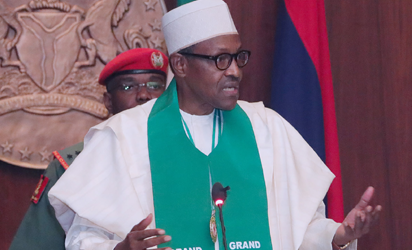
Civil War: Why Nigerian Army wasn’t hard on Biafrans – Buhari

Written by Johnbosco Agbakwuru
~Vanguard Nigeria. Monday, June 4, 2018.

ABUJA – PRESIDENT Muhammadu Buhari on Monday gave reasons why the Nigerian Army was not hard on the separatist agitation of Biafrans during the 30 months civil war.

President Buhari explained that they had strict and formal instructions to exercise restraint against Biafrans during the three-year civil war which took place between1967-1970.

The President recalled that every military commander was issued the instructions in dispatches handed to them from the then Head of State, General Yakubu Gowon, that the Biafrans, were not enemies but brothers and sisters of the rest of Nigerians.

President Buhari stated this at the Presidential Villa, Abuja during his investiture as Grand Patron of the Nigerian Red Cross Society (NRCS).

The President who promised to assist the organisation secure permanent office accommodation in Abuja, showered praises on the former Head of State, Gen. Gowon, retd, for that gesture and also the role of the Red Cross in bringing succour to victims of the war even in dangerous circumstances.


He went memory lane over the horrible consequence of the civil war, noting that the pathetic pictures of war-ravaged Biafrans were always heartrending.

According to him, “Earlier in my profession, during the civil war, I know how much sacrifice members of the Nigerian Red Cross and their international counterparts did both in the real front of operations and at the rear, on both sides. I think it is a lot of sacrifices because anything can happen to you in the operational areas.

“The risks they faced were real and I admire their courage and commitment to helping people who were in distress and were virtually in millions. Those photographs of people from the Biafra enclave spoke a lot.

“I remember with nostalgia the performance of the Commander-in-Chief, General Gowon. Every commander was given a copy of the Commander-in-Chief’s instructions that we were not fighting enemies but that we were fighting our brothers. And thus, people were constrained to show a lot of restraint.

“The international observer teams were allowed to go as far as possible within and outside the front and I think this was generous and very considerate of General Gowon. He is a highly committed Nigerian.”

On his promise to assist the organisation secure permanent office accommodation in Abuja, Buhari said, "I have taken note of your logistics especially your(request for) office here.

"I assure you that the government will do its best when you decide to build such facilities in terms of securing an area here within the Federal Capital Territory and we hope you will not do the Nigerian ways of doing things.


"To use the words of famous Nigerian Minister `I hope you will not build an elephantine headquarters' which is going to be functional because we have seen your activities throughout the country," he said.

In his remarks, the head of delegation and National President of the NRCS, Chief Bolaji Anani, said the organization has over 800,000 trained volunteers based in communities across the 774 local government areas of the federation.


Anani pleaded with the President to assent to the Bill amending the Red Cross Act of 1960, whenever the National Assembly, which was currently debating on it, eventually passes it, noting that the Act has not been reviewed since it was passe in 1960.

Sunday, May 6, 2018

Full Video: What Southern, Middle Belt Leaders told Saraki

~Oak Tv

The President-General of Ohanaeze Ndigbo, John Nwodo, has suggested that too much powers in the hands of the executive is the reason for the disregard of the legislative arm of government by some public officials...

Watch the entire video:


Thursday, December 14, 2017

Benin people 'owned' Lagos, Aworis paid royalties to them -Erelu Abiola Dosunmu

Written by CHARLES KUMOLU
~Vanguard Nigeria. Tuesday, December 12, 2017.

Erelu Abiola Dosunmu
Her Royal Highness, Erelu Kuti IV of Lagos, Erelu Abiola Dosunmu, in this interview, shares her
perspective on the controversy over the 'ownership' of Lagos and declares that the former federal capital was an extension of Benin Kingdom. She explains that there are no ambiguities regarding the ancestry of the aborigines of Lagos, saying they are predominantly Benin. Abiola Dosumu maintains that the Awori ,after settling in Lagos, paid royalties to Benin people. Excerpts:

Are you not concerned about the controversy over the true aborigines of Lagos?

I would not say I am concerned because I know the truth. The history of Lagos is not obscure, it is very clear. If people are going to say the truth, we all know what the truth is.

A friend was saying to me if I was not sure there is no third party trying to take the rights of Lagos through this raging controversy. We all know the story of Lagos from childhood.

Even a play was staged about the beginning of Lagos last year. I just know that the truth will surface after this raging controversy because a lot of the gladiators are being miserly in some of their discussions.

Can you give clarity on some of the things you consider not to be factual among those that have been said so far?

The territory of Lagos has always been an extension of the Benin Kingdom in the sense that they used it as a passage to the port for their trading and interaction with foreigners. We all know that foreigners visited the Benin Empire long before colonialism and signing of the treaty of Lagos. This is their passageway and hunting ground.

As soon as strangers came to settle down, they would pounce on them and make them pay royalties. Like all human beings, when you settle in a place for a long time, it is expected that you will have the right of ownership.

And the foreigners were not ready to be subservient and refused to pay Isakole (royalty) and the Benin king did not take kindly to that. He sent an expedition and subjugated the foreigners and set up his own administration in form of a kingdom.

Therefore, when I say that we are purely and predominantly Benin, it is the truth. The royalty of Lagos is predominantly Benin.

But we have all intermingled and have since inter-married with people from Yoruba land and people from other places. And we are enjoying the two cultures. We are even enjoying more because we now have Igbo, Hausa and other tribes settling in Lagos. We are not enjoying the Yoruba influence alone, we are also enjoying other influences.

Prior to the institution of the royalty with Oba Ado as the first king, who were the people that the Benin met on the ground?

The Benin has always known about Lagos because they considered it as part of their territory and they used it for many purposes. And when the Awori came from Ife to settle in the areas of Lagos, the Benin quickly got them to pay royalties. Benin was landlocked but, as Benin Empire, they were interacting with people from other parts of the world.

Thursday, December 7, 2017

Phenomenon of father of the Igbo race

The SUN Nigeria. Thursday, November 30, 2017.

It's just the right season to bless the world and ourselves with the gifts of goodwill. As writers, there are perhaps no greater gifts than the word, and in the word. So we bring to readers and the world excerpts of our latest work: Nigeria: The Unreported Genocide Against the Igbo – The Generals Olusegun Obasanjo-Murtala Mohammed Diktats. Published by The Stone Press Publishers, 2017. Kindly read and enjoin others:

Let's begin with a tale. A young boy, who is now grown up, Dr. Agu Smart, once called me to inquire whether there was a king called Eshi in Nkwerre history or mythology. What is the matter, I asked? And he told me there is a signpost opposite his old father's country home at Nweke Nkwerre saying Kamgbe-Eshi Palace. I was alarmed. First of all, there is nothing un-Nkwerre as a palace. Nkwerre are free and proud republican peoples to repeat and have no need for palaces, kings, princes and subjects. Or fools.

Anyway, Kamgbe-Eshi metaphorically means before or since time immemorial in Nkwerre. However, for a philologist, there are other hints. One of which is that Nkwerre people say Oha-Eshi, meaning the crowd/community (of Eshi). Also, Nkwerre people would praise sing or name themselves Nkwerre okwara-eshi, meaning Nkwerre firstborn/male of Eshi.

But the matter is not as simple or exhaustive as this. The other facts are: a neighbouring town bears the name Umueshi, meaning children/descendants of Eshi. However, a little furtherer away at Oguta, the Oguta people take pride in their group cognomen; Oguta nwa amaeshi, which translates roughly as, Oguta, princes and princesses or scions of the Household of Eshi. Nkwerre, Umueshi and Oguta are all in Imo State.

Monday, November 6, 2017

ASABA MASSACRE: SEEKING HEALING 50 YEARS AFTER (AN ADDENDUM)

Written by Temple Chima Ubochi
Email: ubochit@hotmail.de
Bonn, Germany
We come nearest to the great when we are great in humility (Rabindranath Tagore)The parents eat sour grapes, and the children's teeth are set on edge'? (Ezekiel 18:2)
The thought that really crushes us is the thought of the futility of life of which death is the visible manifestation (Giacomo Leopardi)
Life's but a walking shadow, a poor player, that struts and frets his hour upon the stage, and then is heard no more; it is a tale told by an idiot, full of sound and fury, signifying nothing (William Shakespeare)
After reading Azuka Onwuka's heart-rending masterpiece on the Asaba massacre (link below), I started soliloquizing, wondering why Lt. Col. Muritala Mohammed, assisted by Major Ibrahim Taiwo, and their men of the Second Division of the Nigerian Army, during the genocide called civil war, were so callous and evil to massacre unarmed Asaba civilians even when they declared they were for peace; pledged their allegiance to Nigeria; and renounced any support for Biafra?

The government that took over Nigeria after the failed first coup, but was sacked by the northern counter coup led by Muritala Mohammed, TY Danjuma et al: Head-of-State and Supreme Commander of the Nigerian Armed Forces, Major-General Johnson Thomas Umunakwe Aguiyi-Ironsi (centre) with his Regional Military Governors from left to right; Lieutenant-Colonels, Hassan Usman Katsina (North), Francis Adekunle Fajuyi (West), Chukwuemeka Odumegwu Ojukwu (East) and David Akpode Ejoor (Mid-West), 1966 (Courtesy: Alex Otti)
Then, I started looking for answers why the second battalion of the Nigerian army, under the leadership of Muritala Mohammed, isolated Asaba town, and why the Asaba people were marked out for elimination, afterall, Asaba is not inside the Igbo mainland? It then occurred to me that the calculated effort to massacre Asaba people was vindictive.


A year before the massacre, some junior army officers sacked the First Republic government of Nigeria through a failed bloody coup. One thing leading to another, few prominent Northern leaders were killed, and a military government was enthroned - the then Nigeria's Prime Minister, two Premiers, politicians and top ranking soldiers were killed, and that coup later led to that civil war of 1967-1970. The northerners termed that coup an Igbo one, despite the fact that the officers who carried it out came from all parts of Nigeria. The leader of that coup was Major Kaduna Nzeogwu, and was from Asaba. The massacre was a payback for Asaba for producing Nzeogwu who led the coup that killed some northern leaders.

Muritala Mohammed; as a military officer; civil war commander; and head of state was a fiend incarnate; unfortunately, people didn't know or see how devilish he was, before he went the way of those he sent to their early graves. Tell me why Asaba people should be singled out for elimination, because Kaduna Nzeogwu was from there? Afterall, Dimka or Orka's respective towns or people were not sequestered for elimination after their own failed coups.

THE IGBO RANT

I am an Igbo, I was born an Igbo, I live the life of an Igbo, I come from Igbo, I speak Igbo, I like to be Igbo, I like to dress in Igbo, I eat Igbo food, my heritage, culture and tradition is Igbo, my parents are Igbo.

Am sorry I cannot help it if you hate my lineage. Am sorry I cannot help it if you detest Igbo, am sorry I cannot help it if you hate me because am Igbo. Igbo is who I am, my name is Igbo and I must die an Igbo.

You see Igbo as a threat, why? You call Igbo rapist, criminals, ritualist, prostitutes, kidnappers. You attribute all negative vices to represent Igbo? Why do you do that? You do because you feel threatened that Igbo might outrun the rest of the tribes. Why do you hate Igbo and despise us? You do that because we are creative, enlightened, hardworking, industrious, genius, intelligent, smart, rich, beautiful and amazing. But its difficult for you to admit it because you feel jealous of my race.

Igbo do not own politics, Igbo do not control the economy neither do we control the natural resources and the common wealth of the nation. You do, we don't and yet, despite the fact that you own everything, we still remain one indispensable race that has outshined the other race in all ramifications.

You fear us because you want to exterminate and annihilate our race, you deny us many things and yet we are stronger, richer and mightier. You fear us because we are everywhere. You fear us because no matter how rural a place might be, when Igbo steps in, they turn it into a Paradise. We have our own resources, which lies in resourcefulness, we do not bother you and your control over the polity, but yet when we cough you and the other race begin to shiver.

Am proud being an Igbo, am proud of my heritage and culture. Igbo means high class, Igbo means independence, Igbo means hard work and strength, Igbo means riches, Igbo means resourcefulness, Igbo means self belonging, Igbo means self esteem, Igbo means pride, Igbo means swag.

Udo diri unu umunnem.
# IgboAmaka
# AnyiBuNdiMmeri

Michael Ezeaka
------------------------------

This is beautiful poetry ...

In response to Alaba Ajibola, the Babcock Lecturer Hate Speech against Igbos.

BIBLICAL TRADITIONS OF NDI IGBO BEFORE THE MISSIONARIES CAME TO AFRICA* IGBO 101.

1. NSÓ NWANYĮ
In Igboland women live apart from their husbands and neither cook for them nor enter their husband's quarters when they are in their period. They are seen as unclean. Even up till today such practice is still applicable in some parts of Igboland especially by the traditionalists. Before a woman can enter the palace of Obi of Onitsha, she will be asked if she is in her period, if yes, she will be asked to stay out.

Leviticus 15: 19-20
When a woman has her monthly period, she remains unclean, anyone who touches her or anything she has sat on becomes unclean.

2. ANA OBI
An Igbo man's ancestral heritage, called “Ana Obi” is not sellable, elders will not permit this. If this is somehow done due to the influence of the West the person is considered a fool and is ostracized by the community.

1 Kings 21:3
I inherited this vineyard from my ancestors, and the Lord forbid that I should sell it, said Naboth.

3. IKUCHI NWANYĮ
Igbos have practiced the taking of a late brother's wife into marriage after she had been widowed until the white men came. Now it is rarely done but except in very rural villages.

Deuteronomy 25:5
A widow of a dead man is not to be married outside the family; it is the duty of the dead man's brother to marry her.

4. ĮGBA ODIBO
In Igboland, there is a unique form of apprenticeship in which either a male family member or a community member will spend six (6) years (usually in their teens to their adulthood) working for another family. And on the seventh year, the head of the host household, who is usually the older man who brought the apprentice into his household, will establish (Igbo: idu uno) the apprentice
by either setting up a business for him or giving money or tools by which to make a living.

Exodus 21:2
If you buy a Hebrew slave, he shall serve you for six years. In the seventh year he is to be set free without having to pay you anything.

5. IRI JI OFŲŲ
In Igboland , the yam is very important as it is their staple crop. There are celebrations such as the New yam festival (Igbo: Iri Ji) which are held for the harvesting of the yam. New Yam festival (Igbo: Iri ji) is celebrated annually to secure a good harvest of the staple crop. In the olden days it is an abomination for one to eat a new harvest before the festival. It's a tradition that you give the gods of the land first as a thanksgiving.

Deuteronomy 16:9
Count 7 weeks from the time that you begin to harvest the crops, and celebrate the harvest festival to honor the lord your God, by bringing him a freewill offering in proportion to the blessing he has given you. Celebrate in the Lord's presence together with your children, servants, foreigners. Be sure that you obey my command, said the Lord.

6. IBE UGWU
In Igboland it's a tradition that the male children are circumcised on the 8th day. This tradition is still practiced till date.

Leviticus 12:3
On the eighth day, the child shall be circumcised.

7. ÓMŲGWÓ
In Igboland, there is a practice known as "ile omugwo ". After a woman has given birth to a child, a very close and experienced relative of hers, in most cases her mother is required by tradition to come spend time with her and her husband. During which she is to do all the work of the wife, while the new mom's only assignment to the baby will be to breastfeed. This goes on for a month or more. In the Igbo old tradition, at this time, the new mom lives apart from her husband, would not cook or enter his quarters.

Leviticus 12:1-4
For seven days after a woman gives birth, she is ritually unclean as she is during her monthly period. It will be 33 days until she is ritually clean from the loss of blood; she is not to touch anything that is holy.

THE IGBO TRIBE AND ITS FEAR OF EXTINCTION

The Igbo tribe is in a serious problem and danger of extinction for the following reasons:

50% of Igbos are born outside Igbo land. Meaning that those children are not likely to live and work in Igbo land and cannot speak Igbo language but foreign language (Yoruba, Hausa, French, English).

40% of Igbos girls between the age of 25 & 45 are single with no hope of marriage because 35% of Igbo boys live overseas and they have all married white ladies.

75% of Igbo youths leave Igbo land every year in search of opportunities in Yoruba, Hausa land or overseas.

85 % of Igbos have family houses and own investments outside Igbo land. They strongly believe in one Nigeria but failed to know that NO Yoruba or Hausa man has a family house or investment in Igbo land.

Igbos are the only people who believe that living outside their land is an achievement.

Igbos are the only tribe that celebrate their tradition outside their land e.g. Eze Ndi Igbo, Igbo Village in America and this is because they have family homes in foreign lands.

Igbos have failed to know that the children you have outside Igbo land especially overseas will never think of living in Igbo land. So what happens to the properties you are building for them when you are gone?

Igbos are the only tribe who see their land as a place to visit or a tourist site than a place to work and live.

Igbos are the only tribe who instead of promoting and appreciating their culture through movies and documentaries they have sought to ridicule it by portraying rituals, killings, wickedness, love for money and other social vices which were not originally inherent in our culture thereby cursing more harm than actually promoting their culture.

Igbos are the only people who without hesitation believe their history and description when it is told or written by an enemy or a foreigner. E.g. that you do not love yourselves or that you love money.

Igbos are the ONLY largest tribe on earth who fought for their independence and failed to achieve their freedom after 40 years.

Igbos are the only tribe who fails to honour their brave heroes and heroines especially the innocent children starved to death during the Biafran war.

Igbos are the only tribe who embraced their enemy after a bloody civil war and subsequently become slaves.

Igbos do not find it necessary to teach their own version of history to their children.

Igbos fight for marginalisation in Nigeria but has no collective strength or teeth to bite.

Igbos how long are you going to fight for your relevance in Nigeria?

How long are you going to fight for a functional airport, rail networks and other structural establishments that underpin sustainable development?

How long are you prepared to wait for your enemy to guide you to your destiny?

Oh Igbos!
Where are your leaders?

Unfortunately, none of them live and work in Igbo land. If you wish to save the future of your children, your identity, your generation and your race then you need freedom and that freedom is Biafra.

Ukpana Okpoko gburu bu nti chiri ya!

By Chime Eze
#COPIED

RT. HON. DR. NNAMDI AZIKIWE TO DR. CHUBA OKADIGBO (1981)

"My boy, may you live to your full potential, ascend to a dizzy height as is possible for anyone of your political description in your era to rise. May you be acknowledged world-wide as you rise as an eagle atop trees, float among the clouds, preside over the affairs of fellow men.... as leaders of all countries pour into Nigeria to breathe into her ear.

But then, Chuba, if it is not the tradition of our people that elders are roundly insulted by young men of the world, as you have unjustly done to me, may your reign come to an abrupt and shattering close. As you look ahead, Chuba, as you see the horizon, dedicating a great marble palace that is the envy of the world, toasted by the most powerful men in the land, may the great big hand snatch it away from you. Just as you look forward to hosting the world’s most powerful leader and shaking his hands, as you begin to smell the recognition and leadership of the Igbo people, may the crown fall off your head and your political head fall off your shoulders.

None of my words will come to pass, Chuba, until you have risen to the very height of your power and glory and health, but then you will be hounded and humiliated and disgraced out of office, your credibility and your name in tatters forever...”
THE REST IS HISTORY AS EVERY WORD OF THE CURSE ON CHUBA CAME TO PASS.

LET'S BE AS PASSIONATE AS WE WANT TO AND BE MODERATE IN OUR CONTRIBUTIONS IN PUBLIC DISCUSSION TO ISSUES AS WORDS OF OUR ELDERS ARE WORDS OF WISDOM

The Igbo: We die for causes, not for personalities

Written by Emeka Maduewesi

~on fb. 28th September, 2016.


The Igbo will never die for anyone. We will not even riot for anyone. But the Igbo will die for any cause they believe in because the Igbo have a true sense of justice and a determination to obtain it.


The Igbo will not riot because one of their own lost an election. Operation Wetie was the Western response to a massively rigged 1965 election. The Yoruba doused fellow Yorubas in petrol and burnt them alife. Properties were burnt with occupants. The Igbo will never do this.


In 1983, the Yoruba went on a rampage again over the massive rigging by NPN. Lifes were lost and properties destroyed. The riots were over personalities.


Contrast that with Anambra State where Chief Emeka Ojukwu was rigged out by his own NPN, who also rigged out Chief Jim Nwobodo. The Igbo did not protest because the goat's head is still in the goat's bag.


In the North, ba muso was the battle cry when Sultan Dasuki was imposed on the Sokoto Caliphate. The riot and protest lasted for days and crippled economic activities.


The Igbo will riot over issues and causes. The Aba Women Riot was over Tax. The Enugu coal mine riot was about conditions of service. The Ekumeku Uprising was over British colonialization.


Those of "Ekumeku" ancestry - Umu Eze Chima and Umu Nri - were at the forefront of the struggles for Nigerian independence, with people like Dr. A A Nwafor Orizu and Chief Osita Agwuna serving prison terms. Any struggles the parents could not conclude is continued by the children by other means.


The Biafran war was a response to the genocide. The war in fact was brought upon us. The battlefield was Eastern Region. The war ended in 1970 but the issues and causes were not resolved. That is where we are today.


The Igbo will also jointly rise to fight evil in their midst. They did it in Onitsha in the 1980's, Owerri in the 90's, and with Bakkassi in the 2000.


The Igbo will not die for any man. But the Igbo will stand by any man who symbolizes their cause and their pursuit of justice. Even if the man dies, the struggle continues, and like the Ekumeku warriors, the children will pick up the baton from their parents.


This is the Igbo I know, the Igbo I am, and the Igbo we are. This is my story. Feel free to tell yours.

Biafra Videos: Explosive secret about Biafra...

Popular Posts