In this publication

Informative (194) Ndigbo (172) Biafra (129) Viewpoint (124) Matters Arising (108) Issues (84) Nigeria (80) Letters (72) Historical (70) Government (63) Personalities (63) Columnist (49) Ethnicity (47) Politics (46) Opinion (45) Yoruba (40) Nationalities (38) IPOB (36) Traditional (35) Educational (30) Cultural (26) Controversial Viewpoint (24) Interview (24) MASSOB (21) Ohaneze (21) Controversy (20) About Ojukwu (19) Arewa (19) Igbo (19) Crisis (16) Discussion (16) Anambra (14) Afenifere (13) Military (12) Abomination (11) Hausa (11) Onitsha (11) Entertainment (10) News (10) Genocide (9) Gists (9) Picture story (9) Religious (9) Commerce (7) Gowon (7) Niger Delta (7) Nnewi (7) Lagos (6) Africa (4) Anioma (4) Awolowo (4) Benin (4) Food and Nutrition (4) Nnamdi Azikiwe (4) Owerri (4) Relationship (4) Technology (4) Video (4) South-South (3) Southern Cameroon (3) Travels (3) Achebe (2) Asaba (2) Awka (2) Cameroon (2) Enugu (2) Igala (2) Imo (2) Inspirational (2) Israel (2) Nnamdi Kanu (2) Ogidi (2) Alex Ekwueme (1) Banking (1) Benin Republic (1) Books (1) Calabar (1) China (1) Col. Achuzia (1) Cross-River (1) Edo (1) Fulani (1) Ghana (1) Health (1) Libya (1) Medical (1) Motivational (1) Ndi (1) Niger Republic (1) Nollywood (1) Obasanjo (1) Oko (1) Rwanda (1) di (1) n (1)

Search this Site and the Web

Showing posts with label Controversial Viewpoint. Show all posts

Wednesday, March 4, 2026

THE YORUBAS DON'T WANT THE IGBOS TO BREAKAWAY FROM NIGERIA

 By Elder Babatunde Biodun

THE YORUBAS DON'T WANT THE IGBOS TO BREAKAWAY FROM NIGERIA. Here are the reasons: Written by Chief Babatunde Abiodun.
The truth is that we Yoruba people don't want Igbo people to leave Nigeria. This is the truth most of my people will not tell you. We need the Ịgbo people, yet we are afraid of their ingenuity.
A lot has happened to the Igbo people. They were kị́lled during the war. Their properties were taken. They were removed from their government jobs. Their houses, churches, markets and even farm lands were bombed, yet they are standing.
Who would have believed that Ịgbo properties were seized in Lagos in 1967, and in 4 decades later, they have virtually bought the entire Lagos, and the only thing we could do is start destroying their properties in the name of building in the wrong places. And I ask, are we not the ones who sold those places to them? Where were the government when they erected one block?

Tuesday, June 15, 2021

SETTING THE RECORDS STRAIGHT ABOUT FIRST REPUBLIC PURPORTED IGBO DOMINANCE

~Anonymous Author

A scripted deception has been circulating all over social media, including WhatsApp groups, suggesting that Igbos, despite being dominant in Tafawa Balewa's government, went ahead to kill him. Nothing can be farther from the truth. This script has turned history on its head. The narrative is designed to present Igbos as disloyal power grabbers and confuse gullible readers, obfuscate the past and promote national discord.

Let us set the records straight; Igbos played no dominant role in Balewa's cabinet. The outline below will help demonstrate this.

Sir Abubakar Tafawa Balewa, was the Prime Minister of Nigeria from the pre-independence era (1957) until the January 1966 coup, in which he died. During this period, he had three cabinets in total. Balewa established his first cabinet in 1957 after he was appointed Prime Minister by the British Governor-General. The second cabinet was formed after the general elections of December 1959, just before independence, in a coalition government. The third cabinet was formed after the disputed general elections of December 1964 and dissolved after the military coup of 15 January 1966.

Here are the ministers who served in all three cabinets;

Friday, February 12, 2021

Ah Yoruba people !!!

 Author Unknown (received as 'Forwarded Many Times' via WhatsApp)

Ah! I remember the giddy days and fervor with which the Yoruba's campaigned for Buhari! How their girls would kiss his poster. How they did t-shirt aso-ebi's with Buhari and Osibanjo's picture where they were drinking sachet Milo tea! Ah those heady days! Days where the Yoruba's poured online warriors all over the internet to sell Buhari's candidacy, a man they dressed in borrowed garbs from the East and West but never in Fulani attire!

A man they insanely loved to the point that they hated anyone who said otherwise and called them "thieves" or beneficiaries of PDP "looters." Yoruba imams, pastors and babalawo's praised and prayed consistently for Buhari and earnestly yearned for his leadership because, to them, he would rule with hate for corruption, nepotism, ethnic chauvinism and he would be a President for all. They cursed all in opposition and labelled them with all sorts, such was the hate emanating from the very top of religion/religious leaders. Indeed for all! Yoruba intelligentsia all lined up and outdid themselves with beautiful prose in awe of Buhari!

You were hated in class, in the market, in church, in mosque, on the streets and in friendly gatherings if you dared speak against their messiah - Buhari! Such was the love that friends cut ties, religious institutions blacklisted anyone who did not toe the Buhari line. It was a complete wipeout of opposing voices of reason or call for closer scrutiny of the man they were selling! Even their revered poet body-shamed a fellow human being with the appellation - "shepopotamus." Such was the hate that it didn't matter the victim was a woman!

Friday, September 25, 2020

ARE YOU A RICH MAN? THOSE SONS OF YOURS MAY KILL YOU IF YOU DON'T DO SOMETHING NOW.

By Anayo M. Nwosu

 It was an unplanned gathering of very wealthy Nnewi men, each with a head bowed in regret as one of them was informally addressing them, making his points with known examples.

 It was then that the elderly ones amongst the rich who were particularly based in Lagos realized the great disservice they had done to themselves and their families.

 Ogbudaa Akaekpuchionwa 1 of Nnewi might not have accumulated enough money to justify his guts to address his wealthier kinsmen but whatever he lacked in his bank account he made up in wisdom and eloquence.

 The wealthy sons of Nnewi had converged in the house of one of their kinsmen who had just died on a condolence visit, as it is the practice whenever a kinsman dies.

 Upon receiving the news of a kinsman's death, everyone would immediately head towards the deceased house to condole with the family and to ascertain funeral plans and any area they could assist.

 When a wealthy man of Nnewi extraction dies, within an hour, his house would be besieged by sea of heads, both of the poor and of the rich.

 Chief Akuenwebe's death was not unexpected as he had slipped into coma six months ago after suffering a multiple heart attack. His death was seen as a relief by his close friends and family members who knew what he was passing through.

 Ogbudaa Akaepuchionwa believed that his message would be better appreciated by his wealthy kinsmen while still under the sober mood caused by the death of Chief Akuenwebe.

 And he cashed in on it.

 "Umunaa (meaning 'my kinsmen') for how long shall we continue to allow the same thunder to strike us twice?" he started.

1966 coup plotters planned to make Awolowo Head of State — Olutoye

 50 years after, Oba Olutoye, participant in Nigerian Civil War tells the world that Nzeogwu coup was meant to install Awolowo

1966 coup plotters planned to make Awolowo Head of State — Olutoye

The Owa of Ido-Ani, Oba Olufemi Olutoye, is a retired Major-General in the Nigerian Army. In this interview with PETER DADA, he shares his experiences as a soldier and his level of involvement in the 1966 military coup

Can you share your background with us?

My name is Olufemi Olutoye. I was born in Ido Ani town, Ose Local Government Area of Ondo State. I spent the early part of my childhood days in Benin City, Edo State, when my father was the headmaster at St. James’ Primary School, Benin City. From there, I went to Government College Ibadan in 1945. I completed my secondary school education in 1949. I then gained admission to the University of Ibadan in 1950 and I graduated in June 1954. I also went to Cambridge University and concluded my course there in 1955. When I returned to Nigeria, I started teaching at the Olu-Iwa College, Ijebu Ode, (now Adeola Odutola College). Later, I left teaching to join the Nigerian Army in 1957 and I retired in 1977.

What informed your decision to join the army, when you were a university graduate?

I believed then that I had attained the height of the teaching profession because teaching then was different from what we have now. I worked in a private school and I believed I had already reached the limit and that there was nothing to look forward to again. Secondly, I wanted adventure.  I taught briefly in a public school in England where there was a Cadet Corps, where young boys were given uniforms. I asked myself then that why couldn’t we have such kind of school in Nigeria? I was the acting principal for a year, so I had to leave after that. That was when I got to the army where I rose through the ranks to become Major General before I eventually retired in 1977.

You were in the army when the first coup happened in Nigeria. Can you tell us about your experience?

I hope that I will have time to write more about that coup but I am doing something on it right now. The coup was led by Chukwuma Kaduna Nzeogwu. He was a Major in rank and of course, I was a Major then too but I was his senior. So I knew about that coup. I can say that now but I could not say that then because, in the army, the mere knowledge of a coup is a problem. We were together in India. So, he informed me about it and I enquired more about how he hoped to carry out the plot. When he told me that it would involve killings,  I told him to count me out. I told him that I did not join the Nigerian Army to kill Nigerians.

Was he the one that personally approached you to inform you about the plan?

Yes, he personally came to inform me about it in 1964 when we were in India and the coup was carried out in 1966. Few other things happened which we cannot say now until the time is ripe.

Thursday, July 16, 2020

Bastardisation of Igbo chieftaincy titles no longer acceptable - Ndigbo

*It is worrisome, we should fashion a general rule to safeguard our cultural values - Ohanaeze
*Monarchs should scrutinize recipients - Eze Nwabeke

*Some monarchs debased titles by advertising them on social media - Ozo Anaekwe

*It is against natural justice to give chieftaincy titles to people of questionable character - Igwe Ukuta

VANGUARD  Wednesday, July 15, 2020
By Anayo Okoli, Chimaobi Nwaiwu, Ugochukwu Alaribe, Chinedu Adonu, Chinonso Alozie & Ikechukwu Odu – Enugu

Ab initio, in Igbo land, chieftaincy titles are conferred only on illustrious men and women who have distinguished themselves in one thing or the other.

Some of them through their philanthropic disposition built roads, schools, churches, industries, markets, instituted scholarships to the people and other commendable and developmental projects/activities. Then, chieftaincy titles had value and respect. They were not common because they were not gotten easily.

But today, the situation has changed for bad. Chieftaincy titles no longer carry weight; they have lost their respect and value as they are purchased from traditional rulers, some at ridiculous prices.

Monarchs now dish titles out to even men of questionable characters, including known fraudsters, just because they have the money to throw around. Today, the once prestigious titles meant for men of good heart and goodwill have been bastardized and almost made worthless.

This, no doubt is giving some Igbo people concern, including the apex Igbo body, Ohanaeze Ndigbo. Some Igbo leaders, traditional rulers inclusive attributed the problem to various issues.

Ohanaeze Ndigbo, in particular, regretted that the cultural values of Ndigbo have been badly eroded in every aspect to the extent that chieftaincy titles now go to people with very questionable characters.

According to Prince Uche Achi-Okpaga, the national publicity secretary of the apex Igbo body, the bastardization of chieftaincy titles is part of the entire mess Igbo culture and tradition have gone through.

"The crux of the matter is that our cultural values have been ferociously eroded in all ramifications. The issue of chieftaincy titles does not exist in oblivion. It is part of the entire mess.

“Our young men, in the words of Prof Chinua Achebe, "…whose palm kernels were cracked by benevolent gods…" covet chieftaincy titles as if their lives are tied to it.

Tuesday, May 5, 2020

Anioma v Igbo

Written by Cheta Nwanze, a researcher, lives in Lagos

VANGUARD Nigeria, Saturday, May 2, 2020.

Last year I took my friend and partner, Tunde Leye to my homestead. In going to that area, we did not cross the Niger River (Oshimmiri in my native dialect) the way most people cross it these days. Rather, we went the old way. We took a boat from Cable Point (Ikpele Nmili) in Asaba, and 12 minutes later, we were sharing a beer with some of my acquaintances at Onicha Marine. You see, for those who know the history, Asaba and Onitsha, prior to the building of the bridge, both communities were quite closeknit, something we'll discuss later on today.

Tunde preparing to cross the Niger River at Cable Point, Asaba.

The third point in the dictionary definition of a mongrel is "any cross between different things, especially if inharmonious or indiscriminate."

As an aside, I think it's time for me to do my first social media appeal. Is anyone willing to finance me to go and sit with her in New Zealand once this pandemic is over? She lives there now, and she is such a repository of Igbo history. She was born in 1939 which means that at 81, the window for a comprehensive debrief of the stuff which didn't make any of her three books that focused on the Igbo people is closing...

Let me go back to topic.

In the last few days there has been a lot of argument on Twitter about whether the Igbo speaking people of Delta State in Nigeria are Igbo, or something called Anioma. Some people from this area have pointed out that they have been victims of taunts by some Igbos from the East of the Niger, who have themselves said that Delta Igbos are not Igbo.

Both sides of this argument are right, but one tweet I saw was an outright lie. There is no one from the East who will call a native Anioma person "Onye ofe mman. That particular slur is reserved for Yoruba people as the thinking behind that stereotype is that the Yoruba people cannot cook, but rather drown their soups in oil and pepper to cover the lack of culinary skills. My pot belly can tell you that that stereotype is way off, but that is another topic for another day...

The words used for the various peoples of the former Bendel are as follows - Nd‹ Ika to describe the Igbo speaking peoples of the Midwest; Nd‹ Idu to describe the Bini people; Nd‹ ohu (a slur) to describe the Esan people (and the history of this is actually linked to Benin); Nd‹ Usobo to describe those in the "proper Delta", that is the Ijaw, Ijekiri, Isoko and Urhobo.

Now, the problem with most of Nigeria, is that we do not know where we are coming from. Generally, if you do not know where you're coming from, it's kinda hard to know where you're going to.

Too many Igbo people both East and West of the Niger, do not know where they are coming from. Referring back to the piece I highlighted earlier, I pointed out that, " The Anioma sub-group is divided into two, Enuani and Ukwuani. Enuani and Onitsha people migrated from Igala along with Ishan." This is incomplete.

In the intervening years, I've had discussions with older men in Onitsha, Idumuje-Ogboko, Onicha Ugbo, Atani, Obosi, Issele Azagba and Ibusa, and built a more complete profile. Yes, some Onitsha people indeed came from the Igala area, but most claim their ancestry from around Benin (possibly from what is now called Igbanke), who fled East sometime in the 16th Century to escape the wrath of Oba Esigie. These people, under their leader, Eze Chima, founded a number of towns along the way - Œnicha Ugbo, Œnicha Œlna, Issele Uku, Issele Azagba, and then one of their number crossed the great river, and settled at Œnicha Mmiri, which is today known simply as Œnicha, or as the British colonists three centuries later transcribed it, Onitsha.

Monday, October 28, 2019

Yoruba leaders disagree over origin, meaning of their name

Vanguard Nigeria. Saturday, October 26, 2019
By Dayo Johnson, Ola Ajayi, Rotimi Ojomoyela, Shina Abubakar

…'Yoruba' is derived from derogatory word, 'Yariba'-Fani-Kayode
…Why earliest Hausa/Fulani called our forefathers 'Yariba'- Prof Ajala
…It was accepted, adopted out of ignorance -Rt Hon Jumoke Akindele
…It's an untrue, unreliable history-Chief Erubami
…O'dua citizens must rise up now -Yoruba Council of Elders
…Yoruba doesn't exist in Ifa - Elebuibon


Yoruba is one of the three largest ethnic groups in Nigeria.They are concentrated in the Southwestern part of Nigeria.

The people constitute about 40 million in the West African region and 35 per cent of Nigeria's population making them one of the largest ethnic groups in Africa according to CIA World Factbook.

The people of this ethnic group were regarded as descendants of a hero called Odua or Oduduwa and they are generally called Yoruba and have Yoruba as their common language though they have several dialects. But do the people who are called by that name really know the origin and the meaning of the word 'Yoruba'? How did the word 'Yoruba' come about?

A member of the race and former Aviation Minister, Chief Femi Fani-Kayode has traced the history behind the name. His discovery stung him. He has therefore rejected to be called 'Yoruba', which he discovered to be insulting and derogatory and called on all the descendants of Oduduwa to renounce the name given to them by their historical adversaries.

According to Chief Fani-Kayode in his official Tweeter handle, the Hausa/Fulani gave the people of the South West region the name 'Yariba', from which Yoruba was derived, which means "shady and unreliable".
He said "I reject that strange name and label. I am not a 'Yariba' or 'Yoruba' but an 'Omo karo jire or an 'Oduduwan' and my language is not 'Yoruba' but 'Anago'. We are what we call ourselves. We are not "shady and unreliable"(Yariba) and we must not accept names given to us by our historical adversaries.

"Any Omo Karo jire or Oduduwan that continues to call himself a 'Yoruba' is lost and does not know the implications of what he is doing to his own people. He is simply affirming and confirming an insulting label which has deep sinister, mystical and spiritual connotations.

Sunday, June 16, 2019

HOW SAD FOR THE YORUBA NATION

The Republican News

FROM A TRUTHFUL YORUBA...

Did the Igbos put guns on anybody's head before buying up Alaba, Ajegunle, isolo and Oshodi in Lagos?

Did they use juju before the Ibadan surrendered Iwo Road to them?

And what were we looking at before the Igbos took over Isida and Adeti in Ilesa ?

Where were the YORUBAS when the Igbos thrived and built 90% of the Hotels in Abuja. Was there a law that excluded the YORUBAS from selling building materials? Dei Dei building materials market in Abuja is 90 % Igbo owned.

So the more we point one finger at the Igbos, the more we have the other four fingers pointing at our laziness and lack of initiative as a society.

The YORUBAS should have been better with all our education, but we may be worse than the Fulanis who just roam around the bush.

Why? Because we lack the entrepreneurship spirit. We just want salaries from doing 8am to 5pm job. We proceed in foolishness and we persist in hoping to reap plenty without sowing hard. The Igbos are different, hence we are now jealous and envious.

We love wasteful parties and Aso Ebi. Just a little business without even making any profit yet, we usually call musicians to spray money like coffetti .

Where are all the Board Members of Ebenezer Obey today? Where is lawyer Omoyinmi and Lanre Badmus? Where is Oroki Social Club of Osogbo? Where is Felates of Ilesa and the likes whose trade mark was to bring Sunny Ade to Ilesa every Xmas, to waste all income gathered for the year?

The Yoruba society wasted their leading lights on excessive consumption and wasteful attitudes. We wasted our capital on frivolous social gatherings.

We took religion to ridicoulous levels, such that the wealthiest pastors and churches are now Yorubas. But all the wealth extracted by the churches from the Yoruba nation is also merely flaunted to show whose God is the most miraculous. 

So we have become paupers and destitutes, as the Yoruba nation cannot now pay salaries. Pensions are owed for years.

Tell me, is Osun State filled with human beings or goats to have tolerated Aregbesola, when they rejected Akande. Say it loud, is the Constituted Authority of Ibadan sane to just bring about 21 Obas from nowhere to receive salaries, where there is no money to reopen Ladoja Akintola University?

Are the Ondos so wise to have allowed Mimiko to devastate their terrain as to be now saddled with 12 months salary arrears? What of Ekiti with rabble rousing Fayose and the intellectually arrogant Fayemi?

Abacha Didnt Die On Top Of Women or Of Posioned Apple -Al-Mustapha.

Former Chief Security Officer, CSO, to the late Head of State, Gen Sani Abacha, Major Hamza Al-Mustapha, has dismissed claims that Abacha died after eating an apple from his concubines. 
.
Narrating how the former Head of State died, Al-Mustapha said contrary to insinuations, the sudden collapse of the health system of Abacha started on “Sunday, 7th June, 1998 right from the Abuja International Airport, immediately after one of the white security operatives or personnel who accompanied President Yasser Arafat of Palestine shook hands with him, Abacha.”
.
Al-Mustapha said shortly after the hand shake, he “noticed the change in the countenance of the late Commander-in-Chief and I informed the Aide-de-Camp, Lt. Col. Abdallah, accordingly. He, however, advised that we keep a close watch on the Head of State.” He said, “Later in the evening of 8th June, 1998, around 6p.m; his doctor came around, administered an injection to stabilize him.
.
 He was advised to have a short rest. Happily, enough, by 9p.m; the Head of State was bouncing and receiving.visitors until much later when General Jeremiah Timbut Useni, the then Minister of the Federal Capital Territory, came calling. He was fond of the Head of State. They were very good friends. “They stayed and chatted together till about 3.35a.m. 
.
A friend of the house was with me in my office and as he was bidding me farewell, he came back to inform me that the FCT Minister, General Useni was out of the Head of State’s Guest House within the Villa. I then decided to inform the ADC and other security boys that I would be on my way home to prepare for the early morning event at the International Conference Centre. “At about 5a.m; the security guards ran to my quarters to inform me that the Head of State was very unstable. At first, I thought it was a coup attempt. Immediately, I prepared myself fully for any eventuality.

Igbo Scare: Southern Cameroon Hate For The Igbo Led To Secession From Nigeria In 1961

By PROF. IHECHUKWU MADUBUIKE

Igbo Scare: Southern Cameroon Hate For The Igbo Led To Secession From Nigeria In 1961 |RN
THE so-called Igbo “scare” in the British

Cameroons between 1945 and 1961 allegedly led the southern part of the British mandate to opt to leave the federation of Nigeria on the 11th of February 1961. The fear of Igbo domination in all the sectors of social and political life in the former German and British territory was given as a major factor. Kumba, Mamfe, Bamenda, Tiko and Victoria had a large number of NdiIgbo who dominated the economy. This led to local resentments, which politicians like Dr E.M.L.Endeley, Chief Manga Williams and J.N.Foncha exploited for selfish interests.
Stereotyping the Igbo did not change the natural disposition of the latter to hard work, aggressiveness, showiness and ethnic pride—all of which may be interpreted as the Igbo hubris, which in literary parlance is a tragic flaw. Yet local resentment did not stop Igbo migration to Cameroons. The Igbo helped to build the Nigerian-Cameroonian Highway. They became petty and full time traders, engaged in farming, sometimes dispossessing original land owners of their lands through legitimate purchases, and held sway in the plantations.

Because of their education, NdiIgbo became dominant in government services and commerce, especially with the departure of the Germans in 1939. Menial jobs were the reserve of the less educated Cameroonians. There were monopolies like the United African Company and John Holt, all owned by the British. Yet the Igbo, not the British, were accused of marginalizing the Cameroonians.

The Igbo, they cried out, controlled the local administration and made it impossible for locals to occupy high government posts. They had a point but the Igbo did not ask them to be laid back and not to go to school. A British Resident administrative officer in Cameroon also accused the Igbo of injustice and, in his own words, as behaving as” if they were a law unto themselves and not wont to recognize ‘local authority”(See Resident, Cameroon Province, Buea, to Secretary, Eastern Provinces, Enugu, 29 June, 1948).
Such reports did not reduce tension; rather the emerging Cameroonian business and political elite fuelled it to advance their political agitations and encouraged many other unproven allegations against the Igbo. Unsubstantiated Igbo misdemeanor, too numerous to bother the reader with here, occupied the social and political space in the late 1940 Southern Cameroons. The Buea Native Authority demanded the expulsion of the Igbo in 1948 accusing them of dominating the plantations, especially.

Earlier, the Bakweri Native Authority had specifically issued the following orders:
1. Nobody is allowed to sell his or her house to an Ibo; neither must anybody give his or her house for rentage to an Ibo.
2. No farmland must be sold to an Ibo or rented to an Ibo
3. Nobody must allow an Ibo to enter any native farm or forest for purpose of finding sticks for building or for any other purpose.
4. House or farm already sold to any Ibo man shall be purchased by native Authority who will afterwards resell same to some suitable person.
5. Nobody shall trade with Ibos for anything of value or not.
6. All landlords must ask their Igbo tenants to quit before 15 March 1948.
7. No Cameroon woman is allowed to communicate with the Igbos in any form
8. Anybody disobeying those rules shall be liable to a fine of £5 or five months imprisonment.
9. Any Ibo native disobeying Rule (3) above will be liable to prosecuting in the Native Court.
10. All Ibo Government officials are exempted from Rule (5) above.
(Cf: Bakweri, N.A. Buea to Senior D.O, Victoria, 21 Feb.1948.).

It is believed that Chief Manga Williams and Dr Endeley, two parliamentarians in the Eastern House of Assembly, were behind these anti Igbo laws.

Sunday, June 24, 2018

Femi Fani-Kayode: THE TRUTH ABOUT WHY NIGERIA REMAINED ONE NATION


Topics:

  • Mindset of the enemy.
  • Yoruba were in world's best universities when Usman dan fodio was still learning to ride a horse
  • The angel of death that stalks the corridors of power by Fani-Kayode
  • The Lion of the East - By Femi Fani-Kayode 
  • The killer midget and the stunted dwarf -Femi Fani-Kayode
  • The Fulani Republic of Nigeria - by Fani-Kayode
  • They Love the Blood by Femi Fani-Kayode
  • Araba, Biafra and ‘your land or your blood’ (Part 1,2), By Femi Fani-Kayode
  • Plane crashes in Nigeria man- made, says Fani-Kayode
  • The Road to Kigali, By Femi Fani-Kayode
  • 'My word for northern minorities' -Femi Fani-Kayode in Jos
______________________________________

THE TRUTH ABOUT WHY NIGERIA REMAINED ONE NATION
By Femi Fani-Kayode

IF YOU REALLY WANT TO KNOW THE TRUTH ABOUT WHY NIGERIA REMAINED ONE NATION, WHO WAS BEHIND IT AND WHY, PLEASE READ THE FOLLOWING.

I HAVE DONE MY RESERACH AND I CAN CONFIRM THAT EVERYTHING THAT THE WRITER HAS WRITTEN IS FACTUAL AND HISTORICALLY ACCURATE. PLEASE READ, COPY AND SHARE:

"If you thought oil was discovered in Nigeria in 1959, you could pass your high school economics with that information. It was actually discovered 50 years earlier.

Did you know that Oil from the Territory was sold for almost 50 years before the approach of Independence in 1960 forced the disclosure of Oloibiri by Britain? Even at that, the quantities were concealed from the newly Independent Nigerian Governments, until the Counter Coup of July, 1966, when the North packed their baggage to head back North in the famous ARABA putsch.

The then British High Commissioner to Nigeria, of course on the promptings and direction of his home Government, zoomed in upon Gowon halfway, and prevailed on him to reverse the decision of moving the North out of Nigeria, at a time Gowon already hoisted the Arewa Flag in a temporary Capital, Ilorin.

In the hurry to announce this reversal, the Gowon’s speech that was originally designed to take out the North, was poorly edited, leaving a portion that should have been expunged and so distorting the concluding part from the body of the speech.

That unexpunged portion is the celebrated Gowonian faux pas in which he in one breathe declared that "Everything considered, the basis of Nigeria's Unity was no more", yet going ahead in the next breathe to proclaim that "To keep Nigeria One is a task that must be done".

Tuesday, June 5, 2018

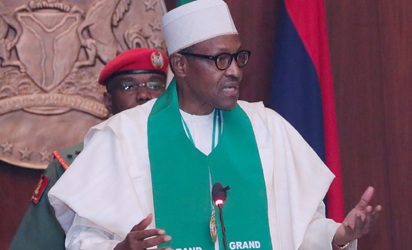
Civil War: Why Nigerian Army wasn’t hard on Biafrans – Buhari

Written by Johnbosco Agbakwuru
~Vanguard Nigeria. Monday, June 4, 2018.

ABUJA – PRESIDENT Muhammadu Buhari on Monday gave reasons why the Nigerian Army was not hard on the separatist agitation of Biafrans during the 30 months civil war.

President Buhari explained that they had strict and formal instructions to exercise restraint against Biafrans during the three-year civil war which took place between1967-1970.

The President recalled that every military commander was issued the instructions in dispatches handed to them from the then Head of State, General Yakubu Gowon, that the Biafrans, were not enemies but brothers and sisters of the rest of Nigerians.

President Buhari stated this at the Presidential Villa, Abuja during his investiture as Grand Patron of the Nigerian Red Cross Society (NRCS).

The President who promised to assist the organisation secure permanent office accommodation in Abuja, showered praises on the former Head of State, Gen. Gowon, retd, for that gesture and also the role of the Red Cross in bringing succour to victims of the war even in dangerous circumstances.


He went memory lane over the horrible consequence of the civil war, noting that the pathetic pictures of war-ravaged Biafrans were always heartrending.

According to him, “Earlier in my profession, during the civil war, I know how much sacrifice members of the Nigerian Red Cross and their international counterparts did both in the real front of operations and at the rear, on both sides. I think it is a lot of sacrifices because anything can happen to you in the operational areas.

“The risks they faced were real and I admire their courage and commitment to helping people who were in distress and were virtually in millions. Those photographs of people from the Biafra enclave spoke a lot.

“I remember with nostalgia the performance of the Commander-in-Chief, General Gowon. Every commander was given a copy of the Commander-in-Chief’s instructions that we were not fighting enemies but that we were fighting our brothers. And thus, people were constrained to show a lot of restraint.

“The international observer teams were allowed to go as far as possible within and outside the front and I think this was generous and very considerate of General Gowon. He is a highly committed Nigerian.”

On his promise to assist the organisation secure permanent office accommodation in Abuja, Buhari said, "I have taken note of your logistics especially your(request for) office here.

"I assure you that the government will do its best when you decide to build such facilities in terms of securing an area here within the Federal Capital Territory and we hope you will not do the Nigerian ways of doing things.


"To use the words of famous Nigerian Minister `I hope you will not build an elephantine headquarters' which is going to be functional because we have seen your activities throughout the country," he said.

In his remarks, the head of delegation and National President of the NRCS, Chief Bolaji Anani, said the organization has over 800,000 trained volunteers based in communities across the 774 local government areas of the federation.


Anani pleaded with the President to assent to the Bill amending the Red Cross Act of 1960, whenever the National Assembly, which was currently debating on it, eventually passes it, noting that the Act has not been reviewed since it was passe in 1960.

Wednesday, March 14, 2018

OBASANJO'S BBC HARDTALK: WHY IGBOS ARE ANGRY WITH NIGERIA: Response

The Republican News
www.twitter.com/RNNetwork1

My friends who are not from the East of Nigeria where Igbos come from often ask me why there is so much anger in the East and among Igbos. Some wonder why, despite the famed Igbo” wealth’ and enterprise all over Nigeria, the people still complain that Nigeria is unfair to them. Some insinuate that the anger comes from the loss of the 2015 election by Jonathan who the Igbos heavily backed.

And why is it that the current generation of Igbos are so angry as to contemplate carrying arms against the country? With lots following Nnamdi Kanu of IPOB with his secessionist message. Those not following Kanu may despise his antics and rhetoric but are sympathetic to his underlying message. And what is that message? That Igbos don’t feel wanted in Nigeria. That decades of official marginalization and discrimination should be stopped or they should be allowed to take their chances in a new nation.

First, for those who think this is all about Jonathan and Buhari. It is not. Igbos were disappointed that Jonathan did not win. But those whose candidates lose elections lick their wounds. It is allowed. It happens when your candidate loses election. Why did the Igbos invest so much emotions in Jonathan, a non-Igbo from Ijaw? It was more because of the fear of their experience in the past 50 years. Nigeria has placed an embargo on any Igbo man becoming Nigerian president and Igbos understand this.

Jonathan was the next best thing. Other parts of Nigeria have supported their sons to the presidency. Some have bombed Nigeria into submission to get their sons to Aso Rock. Igbos have little capacity to blackmail Nigeria to the presidency. They chose Jonathan as their “Igbo”. But that’s not to say that they are angry enough because he lost to contemplate going to war on his behalf. Jonathan was not really the model of a President the Igbo would go to war for. And even his Ijaw people have accepted his loss. So?

Igbo anger has been building up in Nigeria since the 70s. As kids, people made choices in other parts of Nigeria school years based on the narrative of the Igbo place in Nigeria. They knew about the glass ceiling against Igbos.

After the civil war, despite the “No winner, no vanquished” program, Nigeria placed glass ceilings and no-go areas for Igbos. The war reconstruction program was observed more in the breach. There was the “abandoned” property program that was introduced to drive a wedge between components of the former South-East Nigeria. While the country was too embarrassed to put the discrimination program down in an official gazette, it was there for anyone who cared to look. It was evident in the Igbo police officer who stayed in one position while less qualifies juniors progressed to become his bosses. It was evident when no Igbo qualified to become the Inspector General of Police, or lead any division in the armed forces. It was there when "sensitive" or "lucrative" positions were shared in Nigeria and Igbos were conspicuously absent.

It was there when Igbos were only fit enough to be made Minister of Information until Obasanjo administration came to power. And even recently, it was there when Buhari appointed 47 people to man the critical roles in his government and no one from the South east was there.

Thursday, February 8, 2018

Letters to Buhari: Kudos, knocks trail Obasanjo's advise to Buhari

Topics:

Kudos, knocks trail Obasanjo's advise to Buhari
IBB’s full text on 2019: Towards national rebirth
Nigeria’s Messiah from Adamawa?
_______________________________________________

Kudos, knocks trail Obasanjo's advise to Buhari
~Vanguard Nigeria. Wednesday, January 24, 2018.

…Obasanjo to Buhari: Go home, forget 2019


…Calls for a third force to bail out Nigeria,


…Buhari, Tinubu, Akande, APC NWC meet


…Amaechi, Adebanjo, Junaid Mohammed, Okorie, Ozekhome, ACF, others speak; Presidency keeps mum


Former President Olusegun Obasanjo, during his visit to
President Muhammadu Buhari, at the State House, Abuja,
on Thursday, April 7, 2016.
 
LAGOS - Alleging gross incompetence in the face of challenges of state, former President Olusegun
Obasanjo, yesterday, charged President Muhammadu Buhari to sidestep calls for a second term and join him and other former leaders in the rank of statesmen.

President Obasanjo in a scorching 3,564 word statement, lamented that his hope that Buhari would help birth change when he supported him in 2015 had been grossly derailed in the face of what he said was the President's failure to rise above his deficiencies.

While affirming that he was not unaware of Buhari's shortcomings in the areas of the economy and foreign affairs, areas he said he expected him to have sought help, President Obasanjo, however, blasted him for promoting clannishness in governance which had led to increased divisions in the polity and a culture of buck passing.

Obasanjo said his disappointments with Buhari, however, did not mean that the political opposition in the shape of his former party, the Peoples Democratic Party, PDP, was any better.

While noting the appropriation of the opposition party by some forces he said would not offer any change, the former Nigerian leader called on patriots to join him in a third force which he said should birth the change that would take Nigeria to its place of glory.

The Obasanjo Statement

President Obasanjo in his special press statement, entitled THE WAY OUT: A CLARION CALL FOR COALITION FOR NIGERIA MOVEMENT, said: "Since we are still in the month of January, it is appropriate to wish all Nigerians Happy 2018. I am constrained to issue this special statement at this time considering the situation of the country.


"Some of you may be asking, 'What has brought about this special occasion of Obasanjo issuing a special statement?' You will be right to ask such a question. But there is a Yoruba saying that 'when lice abound in your clothes, your fingernails will never be dried of blood'.

"When I was in the village, to make sure that lice die, you put them between two fingernails and press hard to ensure they die and they always leave blood stains on the fingernails. To ensure you do not have blood on your fingernails, you have to ensure that lice are not harboured anywhere within your vicinity.

"The lice of poor performance in government – poverty, insecurity, poor economic management, nepotism, gross dereliction of duty, condonation of misdeed – if not outright encouragement of it, lack of progress and hope for the future, lack of national cohesion and poor management of internal political dynamics and widening inequality – are very much with us today. With such lice of general and specific poor performance and crying poverty with us, our fingers will not be dry of 'blood'.

Wednesday, November 8, 2017

It's wrong to blame Igbo for January 1966 coup - Iwuanyanwu

Written by Emmanuel Elebeke
~vanguard Nigeria. Monday, November 6, 2017.

…Says Ojukwu never supported secession.
 Iwuanyanwu

abuja-Peoples Democratic Party, PDP, stalwart and publisher of Champion newspaper, Dr. Emmanuel Iwuanyanwu has debunked the belief that Igbo policial leaders instigated the January 1966 coup that ended the first republic.

Chief Iwunyanwu made the assertion at the weekend during the celebration of his 75th birthday in Abuja.

He said it was wrong for anybody to insult Igbo by claiming that political leaders from the region masterminded the coup, when in the real sense, the same Igbo leaders stopped the coup from actualising its main objectives.

"Before I die, I want to correct the erroneous belief being fed to Nigerian youths that the January 1966 coup was instigated by Igbo leaders. It is not true. Yes, the person who led it was an Igbo from Delta State but he had with him people from other tribes: Yoruba, Niger Delta and other places.It was a purely military coup. It was not Igbo coup. There was no time Igbo leaders told the military to carry out the coup.

"If for anything, Nnamdi Azikiwe was very sad at the death of Tafawa Balewa, Ahmadu Bello and others. I want the younger generation of Nigerians to know that they are being told lies.”

On why the coup failed, he said: "I want them also to know why the coup failed. It failed because an Igbo man, General Aguiyi Ironsitook up arms and arrested the coup plotters and put them in prison.

”Ironsi was the one controlling the army then. If he had supported the coup, it could have succeeded. So,it was Igbo that stopped the coup. Ironsi was eventually killed because all of us said we do not want unitary government. We wanted political restructuring. We are very serious about it and many Nigerians have said it."

Monday, October 16, 2017

The crackdown on Southern Cameroonians

~ Tribune Nigeria. Thursday, October 12, 2017.

THE axiom that freedom is never willingly given by the oppressor but must be demanded by the oppressed cannot be more apt in dissecting the current crackdown on “dissident” elements in Southern Cameroon. Just like the unsavoury events that followed the independence votes in Kurdistan and Catalonia, Southern Cameroon was a theatre of anguish penultimate week. On October 1, the day some separatist elements in the region sought to symbolically regain their independence from the Republic of Cameroon, the Paul Biya-led government unveiled the state apparatus to crush any dissent. The symbolic declaration of independence was made on social media by one Sisiku Ayuk, the “president” of Ambazonia.

Early this year, the Biya government cut off internet access in the region for three months. It did not even bother to adopt the option of counter narratives to whatever the “separatists” were saying. It announced a temporary restriction on travel and public meetings across the South-West Region. This was after imposing a curfew in the neighbouring North-West Region. Only a fifth of Cameroon’s 22 million people are English-speaking, and the government has always sought to suppress this minority. In 1961, the former British entity, Southern Cameroons, united with Cameroon after its independence from France in 1960. At the inception of the union, the federalist system was adopted, but things were to change in 1974 when a patently fraudulent referendum stage-managed by the centralist government in Yaounde imposed the establishment of the Republic of Cameroon.


The assimilation process, a feature of colonial rule, was adopted by the Yaounde government, along with disparities in many parts of the country’s national life: the distribution and control of oil wealth, education and the judicial system. Believing that the federal arrangement, which would allow them considerable power over their own destiny is the way forward for a united and prosperous Cameroon, the Southern Cameroonians have always staged protests, with a much more hard-line section embracing violent rhetoric and calling for outright secession from the country and the formation of a dream country, Ambazonia. But the central government has never pretended to be enamoured of the federalist proposal, let alone secession. On September 22, as thousands of “Ambazonians” took to the streets in the two English-speaking regions of Cameroon, soldiers reportedly shot at least eight people dead in the restive Anglophone belt, notably Buea in the South-West and Bamenda, the main town in the North-West. Thereafter, teachers and lawyers hit the streets in protest over the use of French in Anglophone schools and courts. This soon mutated into an outright demand for Ambazonia.

Tuesday, June 27, 2017

The Nigeria Question? - Viewpoint: FACTUAL NIGERIA MATTERS ARISING -Reality Check!

Topics: 

  • FACTUAL NIGERIA MATTERS ARISING
  • Is Nigeria a free nation or a conquered vassal state? By Femi Fani-Kayode
  • THE ULTIMATE CORRUPT PRACTICES: THIS IS PURE MADNESS
  • Kaduna Nzeogwu last African soldier revolutionary; not Igbo
  • Your Land Or Your Blood. 
  • IF ANY THING HAPPENS TO NIGERIA, HOLD ISLAM RESPONSIBLE!
  • EMIR SANUSI BARES HIS MIND ON HAUSA, IGBO AND YORUBA… THE PROBLEM OF NIGERIA.
  • good Nigeria is better than a good Arewa, Oduduwa or Biafra.
  • Prof. RACE Achara: Keeping Crime in the Tribal Family
  • IGBO SCHOLAR DISGRACES Femi Fani-Kayode, Demolishes claims on Igbo/Yoruba history with facts and figures
  • VOTE AGAINST COUNTRY IN FAVOUR OF TRIBE.
  • OHANEZE NDI-IGBO AND FULANI INFILTRATION
  • The Fulani Republic of Nigeria - by Fani-Kayode
  • NIGERIA UNITY UNDER THREAT! THE FULANI CONSPIRACY - Obiora Ogochukwu Okafo 
  • THE WILL OF GOD - DONALD J. TRUMP.
___________________________________________________


FACTUAL NIGERIA MATTERS ARISING -Reality Check!
June, 2017.

The Ibos want Biafra
The North wants Ibo's exit
The Yorubas want Ibo's exit
The Ibos are saying "we have investments in your areas and cannot leave them"
And the fight is being cooked.

Amongst all these, the President is in London
Governors are sharing bailout funds
Workers salaries are not paid
Government officials have their children schooling abroad
Ministers and senators are looting

The poor Hausa man is riding Okada
The poor Ibo man is riding Okada
The poor Yoruba man is riding Okada

The poor Hausa man sleeps under the bridge as Alamajiri
The poor Yoruba man sleeps under the bridge as Alaye
The poor Ibo man sleeps under the bridge as agbero

It is pertinent to note that the poor from all ethnic groups in Nigeria have everything in common and so is the rich.

Do not allow the agitation of an Ibo man who lives in UK or USA for Biafra cause the killing of the Ibo man in Adamawa. The rich hate us that much.
Do not allow the Alhaji whose children are living abroad to persuade you to go and start killing on the street of Kaduna.

The problem in the country is not the agitation of any ethnic group but the unity of the elite and the disunity of the masses.

How many times have you taken your agitation to question your local government Chairmen?

Why have you not asked your Governors through agitation how they spent bailout fund?

THE IGBO RANT

I am an Igbo, I was born an Igbo, I live the life of an Igbo, I come from Igbo, I speak Igbo, I like to be Igbo, I like to dress in Igbo, I eat Igbo food, my heritage, culture and tradition is Igbo, my parents are Igbo.

Am sorry I cannot help it if you hate my lineage. Am sorry I cannot help it if you detest Igbo, am sorry I cannot help it if you hate me because am Igbo. Igbo is who I am, my name is Igbo and I must die an Igbo.

You see Igbo as a threat, why? You call Igbo rapist, criminals, ritualist, prostitutes, kidnappers. You attribute all negative vices to represent Igbo? Why do you do that? You do because you feel threatened that Igbo might outrun the rest of the tribes. Why do you hate Igbo and despise us? You do that because we are creative, enlightened, hardworking, industrious, genius, intelligent, smart, rich, beautiful and amazing. But its difficult for you to admit it because you feel jealous of my race.

Igbo do not own politics, Igbo do not control the economy neither do we control the natural resources and the common wealth of the nation. You do, we don't and yet, despite the fact that you own everything, we still remain one indispensable race that has outshined the other race in all ramifications.

You fear us because you want to exterminate and annihilate our race, you deny us many things and yet we are stronger, richer and mightier. You fear us because we are everywhere. You fear us because no matter how rural a place might be, when Igbo steps in, they turn it into a Paradise. We have our own resources, which lies in resourcefulness, we do not bother you and your control over the polity, but yet when we cough you and the other race begin to shiver.

Am proud being an Igbo, am proud of my heritage and culture. Igbo means high class, Igbo means independence, Igbo means hard work and strength, Igbo means riches, Igbo means resourcefulness, Igbo means self belonging, Igbo means self esteem, Igbo means pride, Igbo means swag.

Udo diri unu umunnem.
# IgboAmaka
# AnyiBuNdiMmeri

Michael Ezeaka
------------------------------

This is beautiful poetry ...

In response to Alaba Ajibola, the Babcock Lecturer Hate Speech against Igbos.

BIBLICAL TRADITIONS OF NDI IGBO BEFORE THE MISSIONARIES CAME TO AFRICA* IGBO 101.

1. NSÓ NWANYĮ
In Igboland women live apart from their husbands and neither cook for them nor enter their husband's quarters when they are in their period. They are seen as unclean. Even up till today such practice is still applicable in some parts of Igboland especially by the traditionalists. Before a woman can enter the palace of Obi of Onitsha, she will be asked if she is in her period, if yes, she will be asked to stay out.

Leviticus 15: 19-20
When a woman has her monthly period, she remains unclean, anyone who touches her or anything she has sat on becomes unclean.

2. ANA OBI
An Igbo man's ancestral heritage, called “Ana Obi” is not sellable, elders will not permit this. If this is somehow done due to the influence of the West the person is considered a fool and is ostracized by the community.

1 Kings 21:3
I inherited this vineyard from my ancestors, and the Lord forbid that I should sell it, said Naboth.

3. IKUCHI NWANYĮ
Igbos have practiced the taking of a late brother's wife into marriage after she had been widowed until the white men came. Now it is rarely done but except in very rural villages.

Deuteronomy 25:5
A widow of a dead man is not to be married outside the family; it is the duty of the dead man's brother to marry her.

4. ĮGBA ODIBO
In Igboland, there is a unique form of apprenticeship in which either a male family member or a community member will spend six (6) years (usually in their teens to their adulthood) working for another family. And on the seventh year, the head of the host household, who is usually the older man who brought the apprentice into his household, will establish (Igbo: idu uno) the apprentice
by either setting up a business for him or giving money or tools by which to make a living.

Exodus 21:2
If you buy a Hebrew slave, he shall serve you for six years. In the seventh year he is to be set free without having to pay you anything.

5. IRI JI OFŲŲ
In Igboland , the yam is very important as it is their staple crop. There are celebrations such as the New yam festival (Igbo: Iri Ji) which are held for the harvesting of the yam. New Yam festival (Igbo: Iri ji) is celebrated annually to secure a good harvest of the staple crop. In the olden days it is an abomination for one to eat a new harvest before the festival. It's a tradition that you give the gods of the land first as a thanksgiving.

Deuteronomy 16:9
Count 7 weeks from the time that you begin to harvest the crops, and celebrate the harvest festival to honor the lord your God, by bringing him a freewill offering in proportion to the blessing he has given you. Celebrate in the Lord's presence together with your children, servants, foreigners. Be sure that you obey my command, said the Lord.

6. IBE UGWU
In Igboland it's a tradition that the male children are circumcised on the 8th day. This tradition is still practiced till date.

Leviticus 12:3
On the eighth day, the child shall be circumcised.

7. ÓMŲGWÓ
In Igboland, there is a practice known as "ile omugwo ". After a woman has given birth to a child, a very close and experienced relative of hers, in most cases her mother is required by tradition to come spend time with her and her husband. During which she is to do all the work of the wife, while the new mom's only assignment to the baby will be to breastfeed. This goes on for a month or more. In the Igbo old tradition, at this time, the new mom lives apart from her husband, would not cook or enter his quarters.

Leviticus 12:1-4
For seven days after a woman gives birth, she is ritually unclean as she is during her monthly period. It will be 33 days until she is ritually clean from the loss of blood; she is not to touch anything that is holy.

THE IGBO TRIBE AND ITS FEAR OF EXTINCTION

The Igbo tribe is in a serious problem and danger of extinction for the following reasons:

50% of Igbos are born outside Igbo land. Meaning that those children are not likely to live and work in Igbo land and cannot speak Igbo language but foreign language (Yoruba, Hausa, French, English).

40% of Igbos girls between the age of 25 & 45 are single with no hope of marriage because 35% of Igbo boys live overseas and they have all married white ladies.

75% of Igbo youths leave Igbo land every year in search of opportunities in Yoruba, Hausa land or overseas.

85 % of Igbos have family houses and own investments outside Igbo land. They strongly believe in one Nigeria but failed to know that NO Yoruba or Hausa man has a family house or investment in Igbo land.

Igbos are the only people who believe that living outside their land is an achievement.

Igbos are the only tribe that celebrate their tradition outside their land e.g. Eze Ndi Igbo, Igbo Village in America and this is because they have family homes in foreign lands.

Igbos have failed to know that the children you have outside Igbo land especially overseas will never think of living in Igbo land. So what happens to the properties you are building for them when you are gone?

Igbos are the only tribe who see their land as a place to visit or a tourist site than a place to work and live.

Igbos are the only tribe who instead of promoting and appreciating their culture through movies and documentaries they have sought to ridicule it by portraying rituals, killings, wickedness, love for money and other social vices which were not originally inherent in our culture thereby cursing more harm than actually promoting their culture.

Igbos are the only people who without hesitation believe their history and description when it is told or written by an enemy or a foreigner. E.g. that you do not love yourselves or that you love money.

Igbos are the ONLY largest tribe on earth who fought for their independence and failed to achieve their freedom after 40 years.

Igbos are the only tribe who fails to honour their brave heroes and heroines especially the innocent children starved to death during the Biafran war.

Igbos are the only tribe who embraced their enemy after a bloody civil war and subsequently become slaves.

Igbos do not find it necessary to teach their own version of history to their children.

Igbos fight for marginalisation in Nigeria but has no collective strength or teeth to bite.

Igbos how long are you going to fight for your relevance in Nigeria?

How long are you going to fight for a functional airport, rail networks and other structural establishments that underpin sustainable development?

How long are you prepared to wait for your enemy to guide you to your destiny?

Oh Igbos!
Where are your leaders?

Unfortunately, none of them live and work in Igbo land. If you wish to save the future of your children, your identity, your generation and your race then you need freedom and that freedom is Biafra.

Ukpana Okpoko gburu bu nti chiri ya!

By Chime Eze
#COPIED

RT. HON. DR. NNAMDI AZIKIWE TO DR. CHUBA OKADIGBO (1981)

"My boy, may you live to your full potential, ascend to a dizzy height as is possible for anyone of your political description in your era to rise. May you be acknowledged world-wide as you rise as an eagle atop trees, float among the clouds, preside over the affairs of fellow men.... as leaders of all countries pour into Nigeria to breathe into her ear.

But then, Chuba, if it is not the tradition of our people that elders are roundly insulted by young men of the world, as you have unjustly done to me, may your reign come to an abrupt and shattering close. As you look ahead, Chuba, as you see the horizon, dedicating a great marble palace that is the envy of the world, toasted by the most powerful men in the land, may the great big hand snatch it away from you. Just as you look forward to hosting the world’s most powerful leader and shaking his hands, as you begin to smell the recognition and leadership of the Igbo people, may the crown fall off your head and your political head fall off your shoulders.

None of my words will come to pass, Chuba, until you have risen to the very height of your power and glory and health, but then you will be hounded and humiliated and disgraced out of office, your credibility and your name in tatters forever...”
THE REST IS HISTORY AS EVERY WORD OF THE CURSE ON CHUBA CAME TO PASS.

LET'S BE AS PASSIONATE AS WE WANT TO AND BE MODERATE IN OUR CONTRIBUTIONS IN PUBLIC DISCUSSION TO ISSUES AS WORDS OF OUR ELDERS ARE WORDS OF WISDOM

The Igbo: We die for causes, not for personalities

Written by Emeka Maduewesi

~on fb. 28th September, 2016.


The Igbo will never die for anyone. We will not even riot for anyone. But the Igbo will die for any cause they believe in because the Igbo have a true sense of justice and a determination to obtain it.


The Igbo will not riot because one of their own lost an election. Operation Wetie was the Western response to a massively rigged 1965 election. The Yoruba doused fellow Yorubas in petrol and burnt them alife. Properties were burnt with occupants. The Igbo will never do this.


In 1983, the Yoruba went on a rampage again over the massive rigging by NPN. Lifes were lost and properties destroyed. The riots were over personalities.


Contrast that with Anambra State where Chief Emeka Ojukwu was rigged out by his own NPN, who also rigged out Chief Jim Nwobodo. The Igbo did not protest because the goat's head is still in the goat's bag.


In the North, ba muso was the battle cry when Sultan Dasuki was imposed on the Sokoto Caliphate. The riot and protest lasted for days and crippled economic activities.


The Igbo will riot over issues and causes. The Aba Women Riot was over Tax. The Enugu coal mine riot was about conditions of service. The Ekumeku Uprising was over British colonialization.


Those of "Ekumeku" ancestry - Umu Eze Chima and Umu Nri - were at the forefront of the struggles for Nigerian independence, with people like Dr. A A Nwafor Orizu and Chief Osita Agwuna serving prison terms. Any struggles the parents could not conclude is continued by the children by other means.


The Biafran war was a response to the genocide. The war in fact was brought upon us. The battlefield was Eastern Region. The war ended in 1970 but the issues and causes were not resolved. That is where we are today.


The Igbo will also jointly rise to fight evil in their midst. They did it in Onitsha in the 1980's, Owerri in the 90's, and with Bakkassi in the 2000.


The Igbo will not die for any man. But the Igbo will stand by any man who symbolizes their cause and their pursuit of justice. Even if the man dies, the struggle continues, and like the Ekumeku warriors, the children will pick up the baton from their parents.


This is the Igbo I know, the Igbo I am, and the Igbo we are. This is my story. Feel free to tell yours.

Biafra Videos: Explosive secret about Biafra...

Popular Posts